The Red Sea Crisis Goes Beyond the HouthisTo Avoid a Spiral of Violence, America Must Help Stabilize the Greater Horn of Africa By Johnnie Carson, Alex Rondos, Susan Stigant, and Michael Woldemariam
July 19, 2024A U.S. helicopter flying over the Red Sea, February 2024Hamad I Mohammed / Reuters
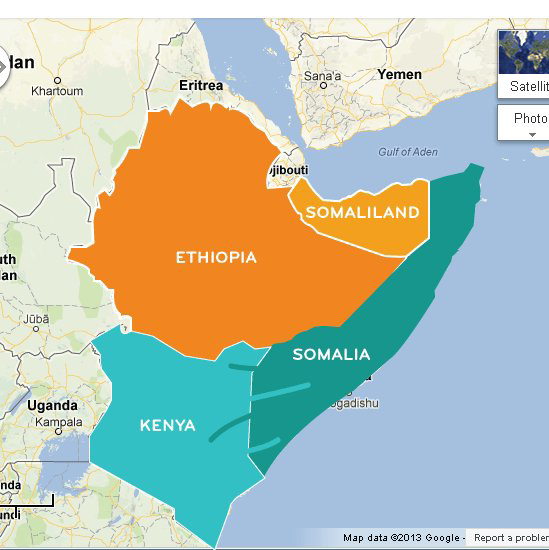
The Red Sea is in crisis. At the center of the storm are Yemen’s Houthi rebels, who have unleashed a wave of attacks on ships traversing one of the world’s most pivotal maritime straits, putatively in support of Hamas’s war against Israel. The Houthi gambit in the Red Sea is imposing serious costs on global trade, as did the problem of Somali piracy, which reached its peak in 2010. The United States and some of its allies have stepped in to militarily suppress the threat, bombing Houthi positions inside Yemen. But although this episode is illustrative of the difficulties of Red Sea security, the crisis extends far beyond the trouble emanating from Yemen.The political violence and state fragmentation that fueled the Houthis’ rise in Yemen is now wreaking havoc across the broader Horn of Africa. A metastasizing web of intrastate and interstate conflicts stretching from Sudan to Somalia could bring unprecedented chaos across the Horn, creating space for extremist militant networks and countries hostile to Western interests and a free and open Red Sea. Preventing the situation from growing even worse will require a broad-based diplomatic coalition to de-escalate the Horn’s multiple conflicts. But such an effort cannot succeed without aggressive U.S. diplomatic support. An American-led push would have to deter destabilizing interventions on the part of outside parties such as the United Arab Emirates and Iran, which have extended military support to warring actors in places like Sudan. It would also need to avert a regionwide famine, the threat of which is most acute in Sudan and Ethiopia. Taking on these daunting tasks will require a boost of diplomatic outreach by senior U.S. officials, including U.S. President Joe Biden. If the region’s interconnected crises worsen, parties hostile to U.S. interests and a free and open Red Sea may gain strategic advantage in this important maritime corridor.A REGION AT WARMultiple wars are causing deep instability in the Horn of Africa and contributing to the crisis in the Red Sea. From 2018 to 2019, popular revolts toppled long-standing authoritarian regimes in Ethiopia and Sudan, but both states have since descended into astonishing levels of violence. A two-year war between Ethiopia’s federal authorities and forces from the Tigray region killed over 500,000 people and displaced millions more. The November 2022 agreement that ended that conflict is under increasing strain as many of its most contentious provisions await implementation. Ethiopia’s two biggest regions—Oromia and Amhara—are suffering from intractable insurgencies, and talks to peacefully resolve the conflict in Oromia ended in failure in November. Although the country’s capital, Addis Ababa, remains stable, insecurity is a constant across much of the rural hinterland.Stay informed.In-depth analysis delivered weekly.Internal tensions in Ethiopia are the backdrop to its deteriorating ties with Eritrea, which faces its own looming questions about an aging leader and a potentially volatile political transition. Eritrea’s President Isaias Afwerki, 78, has been in power for three decades, presiding over a highly personalized autocracy with few viable mechanisms for managing succession. In January, landlocked Ethiopia signed a memorandum of understanding on port access with Somaliland, which seceded from Somalia in 1991 but whose sovereignty is not recognized by any country. At the time of the signing, Somaliland President Muse Bihi Abdi said the agreement would involve Ethiopia’s recognition of Somaliland as an independent state, which could lead to a serious dispute between Addis Ababa and Mogadishu and derail fragile efforts to stabilize Somalia. Djibouti, the traditional port outlet for Ethiopian goods and services, could also face political and economic repercussions from deepening Ethiopia-Somaliland ties, at the same time it also faces uncertainties about political succession.As this has been playing out in Ethiopia, the Sudanese state has effectively collapsed. Sudan’s fractious security apparatus toppled the transitional administration of Prime Minister Abdalla Hamdok in October 2021 and then descended into devastating internal strife in April 2023. By early 2024, the country was the site of the world’s largest displacement crisis, with violence driving an estimated 10 million people to flee their homes. For much of the war, the capital and the country have effectively been partitioned in two, with the main belligerents—the Rapid Support Forces (RSF) and the Sudanese Armed Forces (SAF)—locked in a costly stalemate that both believe they can break. Alarmingly, this already brutal war is set to become even more deadly, as the RSF launches offensives into eastern Sudan, both sides exhibit signs of internal fragmentation, and each seeks to mobilize constituencies along sectarian lines.The war in Sudan has also disrupted the transit of South Sudanese oil to the Red Sea and cut more than 75 percent of revenue flowing to authorities in Juba, South Sudan’s capital. The loss of this money is collapsing the patronage-based deals that anchor the war-torn country’s politics. Civil servants, as well as the military and security services, have already gone months without pay, and this worrying development comes ahead of an ill-defined and potentially volatile electoral process expected later this year. To the east and north, Sudan’s disarray is adding to three-way tensions between Ethiopia’s federal government, Tigrayan authorities, and Eritrea, which are all intimately invested in the balance of power in eastern Sudan. It has also paralyzed the negotiations over the Grand Ethiopian Renaissance Dam, an enormous infrastructure project that affects the water supply of Egypt and Sudan. The last round of talks collapsed in December amid charges of bad faith between Egypt and Ethiopia.Kenya is facing its own political inflection point with leaders under pressure to balance their budget while responding to citizen priorities, as evidenced by recent tax-related protests and subsequent dissolution of the cabinet. The storm gathering along Kenya’s frontiers also increasingly requires its leaders’ time, attention, and diplomatic leadership.SOURCES OF DISORDERThis region is no stranger to instability. But the current crisis is unprecedented in scale and scope. It is also exacerbated by three emerging problems of the twenty-first century’s changing global order. The first and most relevant to the Horn and Red Sea is the growing strength of middle powers keen to assert themselves in their backyard and on the international stage. The explosion of civil war in Yemen in 2014 and the crisis among Gulf countries three years later (which saw Qatar placed under a blockade by its neighbors) precipitated a flurry of financial and military interventions across the Horn by Middle Eastern powers intent on cultivating local clients and denying strategic advantage to their regional competitors. Even as the rivalries that animated this scramble have waned, the pattern of aggressive intervention and its debilitating effects have not. Flush with money and military hardware, local actors across the Horn are doubling down on coercion at the expense of negotiation. The United Arab Emirates is at the center of this problematic activity, as its recent interventions in Sudan (where it backs the RSF) and Ethiopia (where it backs Prime Minister Abiy Ahmed) demonstrate. But many others have also been culpable, including Egypt, Iran, Qatar, Saudi Arabia, and Turkey.Converging demographic, climate, and macroeconomic pressures serve as additional catalysts for disorder. A regionwide youth bulge and rapid urbanization are creating new demands for economic mobility that many governments cannot meet. Between 2020 and 2023, the Horn of Africa suffered five failed rainy seasons, causing the worst drought since the 1980s; meanwhile, South Sudan and Kenya have suffered from debilitating floods. These environmental shocks, combined with conflict, are producing acute hunger crises in Sudan, South Sudan, and Tigray, with nearly 30 million at risk of starvation. And nearly all countries in the region are suffering from a toxic combination of debt, high inflation, and severe hard currency shortages brought on by global economic forces beyond their control, from supply chain disruptions to increased borrowing costs.Meanwhile, the crumbling of global multilateralism has undermined international responses to the Horn’s multiple crises. For four years, geopolitical competition between China, Russia, and the United States has thwarted any serious UN Security Council action on the wars in Sudan and Ethiopia. Power brokers at the African Union have largely scrapped the organization’s founding principle of “non-indifference,” doing little of substance to address these conflicts even as they demand prominent roles in any peace processes. The Intergovernmental Authority on Development, the Horn’s regional trade organization, is paralyzed by internal rivalries and is uninterested in rocking the boat by pursuing peace initiatives that alienate some member states. And even if African multilateral organizations were willing to act, success would require collaboration with powerful players from the Middle East at a moment when there is no forum for the Red Sea that brings together African and Middle Eastern states and makes transregional solutions possible.The Sudanese state has effectively collapsed.This growing instability has been disastrous for the region’s people. It will also be exploited by a constellation of actors hostile to Western interests and a free and open Red Sea. The jihadist group al Shabab, for example, is poised for a breakout in Somalia. President Hassan Sheikh is struggling to suppress the group and reduce its ability to shape the national narrative. He is distracted by the growing closeness between Ethiopia and Somaliland and the rivalry between his administration and Somalia’s member states. He is also facing a drawdown of military support from international partners. Some observers openly contemplate al Shabab’s return to Mogadishu, where it had a strong presence between 2009 and 2012—an outcome that would be comparable to the Taliban’s 2021 return to Kabul in Afghanistan. This reality would immediately imperil neighboring Kenya and even Ethiopia, which has historically been immune to attacks from the group but witnessed a major incursion in July 2022. In Sudan, Western intelligence officials openly worry that the prevailing chaos will create new openings for homegrown terror networks or affiliates of al Qaeda and the Islamic State (also known as ISIS) from the Sahel and Libya.Revisionist states are also making tangible bids for power in and around the Red Sea and Gulf of Aden. The Wagner paramilitary group, the Russian mercenary outfit, has provided support to the RSF, but the Kremlin is now cultivating both sides of the Sudanese war in a bid to retain its stakes in the country’s gold economy and realize a 2020 agreement that would grant Moscow a Red Sea naval base on Sudan’s coast. Russia’s influence in Sudan is now significant. Russia is also exploiting Eritrea’s insecurities regarding Ethiopia to deepen ties with this strategic Red Sea state. Meanwhile, Iran is also on the march. In 2015, Saudi pressure led states across the region to downgrade their bilateral relations with Tehran, but it is now an active player in the Sudan war, providing armaments to the SAF in recent months in a bid to reconstitute historical ties with the country’s security apparatus. This comes on the back of evidence that Iran supplied drones to the Ethiopian military at the height of the Tigray war.LEAN ON FRIENDSThe Horn’s multiple crises can be sustainably resolved only by actors within the region. Yet most of them recognize that the United States must be the critical catalyst for peace. The Biden administration, to its credit, appreciates this reality. It is at the center of diplomatic efforts to resolve the wars in Sudan and Ethiopia and de-escalate tensions regarding the Ethiopia-Somaliland agreement. It continues to be a leading source of humanitarian assistance to the region, and it remains a key supporter of regional counterterrorism efforts.But it is also evident that these efforts have not arrested the region’s slide. To avert the looming strategic catastrophe, which would involve U.S. adversaries leveraging the Horn’s instability to expand their political and military influence along the Red Sea, the United States must enhance its efforts to de-escalate regional tensions and address the Red Sea arena—the maritime route and the surrounding countries (littoral and beyond) in the Horn and Gulf—as a connected geopolitical space. For too long, the activity of Middle Eastern states in the Horn has been a concern of Africa-focused diplomats within the U.S. government but deprioritized by their counterparts in Near East‒focused bureaucracies and the broader foreign policy apparatus. A first step would be a strong U.S. effort to discourage the destabilizing Middle Eastern interventions that are at the heart of much of the chaos. Since many of the key transgressors are U.S. partners, such as the UAE, Turkey, Saudi Arabia, and Qatar, Washington’s concerns about their conduct must be significantly elevated in bilateral dialogues. The United States should make the case to these friends that their interventions harm their long-term economic interests, damage their reputations in ways that make it harder for the United States to deepen bilateral cooperation, and expand the influence of malign actors across the region. The U.S. Congress, which has demonstrated some awareness of the problematic activity of Middle Eastern states in Sudan and across the Horn, must reinforce this message of disapproval and press the administration when it is not being delivered. Hearings and legislation requiring the administration to publicly report on the nature and consequences of Middle Eastern interference in the Horn, as well as U.S. responses, should be put in play.The United States should also mobilize to prevent famine across the Horn, which is a direct symptom of the depth of the crisis and violence in the region. To do so, the appointment of a coordinator for humanitarian relief in the Horn is needed, tasked with reaching deals with armed actors, international relief organizations, and local humanitarians and business interests to secure safe passage of food and basic goods. The most urgent challenge is currently in Sudan, where warring parties have obstructed the movement of aid across the country’s international borders and lines of control.The United States should mobilize to prevent famine across the Horn.A diplomatic initiative of this nature succeeds only with a demonstrable and sustained engagement by U.S. President Joe Biden and Secretary of State Antony Blinken, as well as key defense and intelligence officials that carry weight across the region. The visible role of senior-most U.S. leaders can strengthen the hand of U.S. envoys on the ground in the region, who must be better staffed and resourced to match the complexity of the crisis. Unless the crisis receives this level of attention, U.S. credibility in this strategic zone will continue to be undercut by the impression, widespread across the Horn, that top U.S. policymakers are too preoccupied by the problems of Gaza and Ukraine (not to mention the American presidential election) to consistently engage and try to solve an African crisis. And, as a corollary, the United States is willing to defer to Gulf countries, which do not necessarily share core American interests in the region.The United States should not go it alone. Instability in the Red Sea and the Horn of Africa is a direct economic and security threat to European business and commercial interests. Migration has come to dominate European political debates, and an intensification of instability in the Horn risks exacerbating this problem, further skewing European politics in ways that complicate the transatlantic alliance. The United States must leverage Europe’s direct interests in the region by partnering with the European Union, its member states, and the United Kingdom in active efforts to secure regional peace, with a specific focus on supporting mediation to end the twin wars in Sudan and Ethiopia. Similarly, UN Secretary-General António Guterres, working in close partnership with the African Union and its member states, can play a high-level role in averting a deeper crisis by facilitating better coordination between the array of international envoys attempting to manage the Horn’s multiple hot spots.It is not too late to stabilize the Red Sea, but the window is closing as violence and state fragmentation spread and the influence of U.S. competitors expands. The United States and its partners must act to stop widening crises on land or risk chasing a current of further instability into one of the world’s most vital waterways.You are reading a free article.Subscribe to Foreign Affairs to get unlimited access.Paywall-free reading of new articles and over a century of archivesUnlock access to iOS/Android apps to save editions for offline readingSix issues a year in print and online, plus audio articlesJOHNNIE CARSON is Senior Adviser to the President of the U.S. Institute of Peace. From 2009 to 2013, he served as U.S. Assistant Secretary of State for African Affairs.ALEX RONDOS is a Senior Adviser with the Africa Center at the U.S. Institute of Peace. He formerly served as the European Union’s Special Representative for the Horn of Africa.SUSAN STIGANT is Director of Africa Programs at the U.S. Institute of Peace.MICHAEL WOLDEMARIAM is an Associate Professor at the University of Maryland’s School of Public Policy.MORE BY JOHNNIE CARSONMORE BY ALEX RONDOSMORE BY SUSAN STIGANTMORE BY MICHAEL WOLDEMARIAMMore:Somalia Sudan United States Yemen Diplomacy Geopolitics Economics Trade Security Defense & Military Strategy & Conflict U.S. Foreign Policy HouthisRecommended ArticlesHow Washington Emboldened the HouthisAnd How It Can Prevent Its Fight With the Group From EscalatingNoam Raydan and Grant RumleyIran’s New Best FriendsThe Houthis Have Become Key Partners in Tehran’s Quest for Regional DominanceMohammad Ayatollahi TabaarGET THE MAGAZINESave up to 55%on Foreign Affairs!FOREIGN AFFAIRSWeekly NewsletterGet in-depth analysis delivered right to your inboxABOUTCONTACTSUBSCRIPTIONFOLLOWGRADUATE SCHOOL FORUMFrom thepublishers ofForeign AffairsElection 2024: Will Joe Biden Exit the Presidential Race?James M. LindsayCan Maduro Be Negotiated Out of Venezuela?Author:Elliott AbramsWhat Nguyen Phu Trong's Death Means for VietnamAuthor:Joshua KurlantzickPublished by the Council on Foreign RelationsPrivacy Policy Terms of Use©2024 Council on Foreign Relations, Inc. All Rights Reserved.Subscribe for