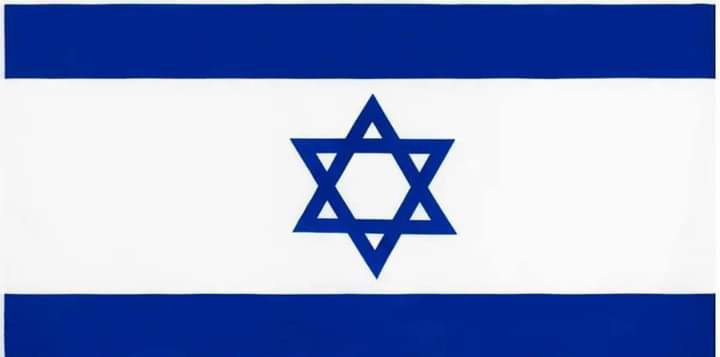
Monday, October 9, 2023

The Brief Historical Analysis of Jewish-Arab conflict .


How Britain Started the Areb-Israeli Conflict. 

October 8, 2023

Ottawa, Canada. 

Documentary transcription by Habtamu Nini Abino. 

11:15 a.m.

The bitter struggle between Arab and Jew control of the Holy Land has caused Untold suffering in the Middle East for Generations. It is often claimed that the crisis originated with Jewish emigration to Palestine and the foundation of Israel. Yet the roots of the conflict are to be found much earlier in British double-dealing during the First World War. This is a story of intrigue among rival empires of misguided strategies and of how conflicting promises to Arabs and Jews created a legacy of Bloodshed, which has determined the fate of the Middle East. 

During the First World ๐ŸŒŽ  War, the British, the French, and the Russians had three plans to carve up the Ottoman Empire because they believed it would balance out their Imperial Ambitions, but tough luck for the Turks, the Arabs, and anyone else, who got into the way. 

Then, in the sense that it was the British who promised the Arabs Independence on the one hand and a Jewish homeland on the other, and you could not simply reconcile one with the other, The British scattered promises to anyone who might be of some use to them without thinking about the consequences. So British duplicity, British double-dealing, went a long way to perpetuate the conflict in Palestine; the end of the day, when you're fighting a war, you are very liberal in what you're offering regarding the post-war settlement. When you get to the conference, Stable, When The War has ended, you must start honoring your agreements. You then had to decide what was in your interest or not. Let me say she saw the Middle East as the stern flank for that power in India and Asia. 

The story of Britain's involvement in the Middle East and the ensuing struggle between Arabs and Jews begins with her Colonial past at the beginning of the 20th century King. Edward the Seventh ruled over a vast Empire with interests in every part of the world. India became increasingly important because It was the second pillar of British power in the world, moving the Indian army about was extremely important in extending British interests and British influence across the globe and the Suez Canal was of course, the quick way to do that, the British IT geopolitical position needs to ensure Suez Canal remains safe and secure. 

With this aim in mind, Britain had become the only European power to establish a major foothold in the Middle East, in the principalities, around the Persian Gulf in Aden and in Egypt. 

Britain had annexed Egypt from the British Ottoman Empire in 1882 and by the time it was made a protectorate in 1914, Cairo had become the center of British power in the Middle East. The presence of Imperial troops in the region was a vital strategic importance for the Ottoman Empire under Sultan Muhammad. The fifth was an alliance with Britain's much-feared rival, Germany. 

Together with the auAustro-Hungarianmpire, these countries made up the Central Powers and pitted against them with the three allies, Britain, France and Russia. 

From the Ottoman Capital, Constantinople in Turkey, the sultan's rule over the last of the great Islamic impact was in an almost terminal decline for decades. If the fate of the Ottoman Empire was to be sealed by the outbreak of the first world war in August 1914. In. German is rapid Advance was halted by Britain and France along in the East Russia's war against Germany, and Austria-Hungary also reach deadlock the powerful weapons of the Industrial Age were killing thousands of men in the trenches of every Army. All of the leading Powers expected the war to be over within a matter of months. So in that sense all of thwereare surprised at the end of 191Notnonlyely is ther going on, but it shows every sign of being likely to go on for a very long time that at point they begin to think about new ways of winning the war. Britain's prime minister asked with felt that, with the stalemate in Europe, it was essential to widen the conflict together with the foreign secretary. Lord grey Minister for war. Lord, Kitchener and the first Lord of Admiralty Winston Churchill. They masterminded a complex strategy to undermine the Central Powers. This was a global war and the British saw the Middle East very much in a global context, the traditional British preference for sideshows. 

People unfavourably call it the indirect strategy, the way of attacking the soft underbelly as Churchill called off of the enemy and the soft underbelseemedeem to be working. Britain, secret plan involved,  on the one hand, a military diversion and on the other a devious use of diplomacy through bribery subversion and double-dealing. All these devices focused on the enemy's weakest link turkey's, the Ottoman Empire, Whether whatever ends and conspiracy begins is an open question, but during the period  there was a particularly intense set of negotiations and discussions between the major Imperial powers between the French. The Russians in the British particularly the Italians as well about what would they do. When the war was over. And when cutting in the Italians, as well about what would they do, when the war was over and when the Ottoman Empire broke up, The British government hoped that by striking a deal Over The Spoils of War, it would strengthen the alliance against the Central Powers 

Amongst the Allies, Russia had long sought access to the Mediterranean, in a secret treaty of March, 1915, Britain and France offered what was to the Czar, a prize of vital geopolitical importance, Constantinople 

It is that he Outlet into the wider world too. The MediterraneaMediterraneanof course, the British and the French have been attempting to prevent the Russians from achieving. So this is a complete V if I'd show this is this is the British, the French and the Russiaagreeing over something which was up to this point, almost inconceivable, Italy's King Vittoria Emanuele is another Target for bribery. Britain, France and Russia. Tried to tempt, Italy.pro-Germanman stajoinedoin the Allies in April 1915. A secret treaty offered Italy, a substantial bit of Ottoman. Real estate in Anatolia. Being offered territorial advancement in advance was inconceivable the bribe for all  Central Powers in August 1915. The British strategy to undermine the enemy via the Ottoman Empire was transpired subversion movement sweeping through the Empire nationalisPeoplees with a clear cultural identity and the sense of believing that their people with a clear cultural identity people should live independently of that idea. Spread to the Middle East as well as to other parts of the world in the latter part of the 19th century. So you had the beginnings in the Ottoman, Empire of it, Turkish Nationals. This came to a head when The Young Turks took power in a coup. In 1908 and started to impose their language and culture on the Arabs of the empire. But this oninterestgst. In the heritage. 

And brought the technology and literature of the East to the West their religion Islam encompassed much of Asia North Africa and Southwestern Europe. Remained in the idea of recovering that historic Grandeur and remained in the consciousness of Arab intellectuals. By the start of the First World War, the antagonism between Arabs and Turks had increased. 

The very fact that the Turks were saying we wanted to have a unified empire meant Arabsaideid, wait a minute, we're not part of this. So all of this literary and nationalistic Revival then took a much more political forum and therefore, you got the emergence of Arab nationalism. They concluded that remaining in the Ottoman Empire was becoming hopeless and that they could not share power with the text. 

And they began thinking of having their own. 

By the summer of 1915 British intelligence confirmed that the Arab nationalist movement was the Breakthrough the government was looking for Britain and a French Ally dispatched officers to sound out Arab leaders. 

Both the French and the British started seducing various local Arab leaders that if they stayed with us, we'd get them their pendency didn't leave the Ottomans and various people were tempted as a result. If they thought they could achieve independence. Why not side with the Europeans against the Ottomans? The idea was to tempt the Arabs into a revolt against the Ottoman warlords creating a diversion. Which would tie down the Central Powers in the Middle East. 

Ironically the impetus for such a diversicomesome not from London, but from the Arab world. 

In the hitches and Western Arabia, Sheriff Hussein. Its ruler was set on extending his political and geographical domain. He believed he might be able to do it with the help of the British in turn. The British were impressed by Sheriff Hussein's family credentials, as custodians of the holy places of Islam. Hashemites, The Gould family ashramites because that's the family or the tribe of the Prophet Muhammad they were tBaniani Hashim, the sons of Hashem. So he was the chief was saying the leader of the Hashemite stand was the person responsible for Mecca and Medina. Although he worked with the Ottomans before the First World War the First World War happened. He saw this was chance, a chance, for the British who saw support for Sheriff Hussein as a way to threaten the Sultan, hold on to the caliphate, the political leadership of the Islamic world, And the British, because they were fighting the Ottomans and the Ottomans were claiming to be the real representative of Islam. They wanted a counter force and the counter force was represented by Sherifwho was a descendant of the Prophet. But chafer saying, was speaking of liberating, Arab lands, building a new national state. He wants to be king of the Arabs, not simply of Arabians. 

11:28 a.m.

A message to the British High Commissioner in Cairo Sir Henry McMahon offering to raise a substantial Arab Force against the Ottomans in return for British support for Arab Independence in the ensuing secret correspondence between the two men suif we're saying was given to understand that he could expect British support in achieving some of his Ambitions in the event of an ottoman defeat his letter of October the 26th. 1915 outlined the main points of the arrangement The actual document itself is Riven with ambiguity. There's no doubt about that. The question is whether Hussein recognized my sense of Husseis that he does recognize it in other words, there is no wool being poured over his eyes because he's perfectly aware that if he's going to create a modern Arab Empire he's going to need some logistical Comic development and that can only come from the outside world. 

Together with his sons. Faisal and Abdullah. A mass, the same together with his sons Faisal and Abdullah. A mass. The sizable Force The new Army was commanded by the young and charismatic Faisal who had captured the imagination of the Arab masses in the Quest for Arab Independence. Yet even as a sane and Faisal momobilizedheir their troops, the British were preparing to sell them short. 

Back in London, in the spring of 1916, Britain was negotiating with France about the future shape of the Middle East behind closed doors. So Mark Sykes of the British foreign office and be meeting his friends opposite. Number Francois, George Pico Britain knew it was vital to offer the French a stake in The Spoils of the Ottoman Empire. Should they win the war? There was an awareness on the British side that they had made such huge sacrifices, but one couldn't just ignore French Ambitions. And the French were determined to have their historical piece of the Levant. Boring ever a map of the Levant Sykes and Pico personally Drew in the areas, thwishedish to see under their control their secret deal amounted to the virtual Carver of the Middle East in ar for the French and Arbe for the British the imperialists intended to exercise power indirectly. They would appoint advisors and take charge of the finances in their respective, spheres of influence. Then there was the arcolouredred blue, which was to be directly controlled by France. This included what was then known as grGreateryria, where the French traditionally had commercial and religious interests, for the area coloured pink known as Iraq, with its strategic ports Railways and oil, this was to be under British rule, 

The arcolouredred yellow represented Palestine and was envisaged as an international Zone except for Haifa. 

What the British wanted was the oil of Iraq and they concentrated on getting Iraq and getting away from Iraq to the Mediterranean to transport the soil. So they got Haifa on the Palestinian coast and they got most of your Arc, The Sykes-Picot agreement a pretty shameful Was drawn up by people who were sort of operating under the old kind of balance of power considerations in an an imperiof frame of mind. 

Unaware of these secret dealings behind their backs, a sand Faisal proclaimed Independence and in June 1916 attacked the Turkish troops the Arab revolt against the Ottomans had begun. 

The Turkish Garrison at Mecca was soon. Overrun and the seaport at Judah seized by 1917 Hussein and Fizzle forces had pushed North, and engaged Ottoman Turks along the Hejazjaz railway, the British saw the Arab Revoashas as part of its strategy for creating a military diversion against the Central Powers in a pincer movement, Britain had launched a campaign from the southwest to ensure control of the Suez Canal and the Levant And from the southeast, it was fighting to secure the oil wells of Iraq, all this to attack the Central Powers at their weakest. Point the Ottoman Empire, and the Arabs, each their fortunes to the British. They considered themselves to be fighting with the Allies but at the same time, they were not nourished into the British arsohat continued to act As an independent Army called, tNoNorthernmy. While the Arab Army Advanced Northwoods, Britain's General Allenby, across the Suez Canal, and by the spring of 1917, his forces, had reached the frontier of Palestine. 

The war in Europe. However, was still not going well for Britain. The attempt pushto pushough the German lines at the port produced little territorial gain and the cost of lives was colossal. 

In London, there had been a change of leadership. The new prime minister Lloyd. George felt that the Allied war effort needed a fresh impetus. Although America had so far been neutral in the war Lloyd. George was convinced that could be changed. He believed there was one powerful Group which might influence the American government. 

Lloyd George thought that the American decision whether to join or not would defend critically on public opinion and the Jewish support could tilt the scales in One Direction or the other. You've got to remember that the British foreign office greatly overestimates the political power of International jewelry, particularly the wealthy financial, and Commercial Jewish Elites, Have British extraordinary about this situation is that here you the British see the Jewish world as one Collective monolithic entity and in that sense, they start looking at the role of the Jews in the war as being something which might be important and from the point of view of the Allies something else quite. Jacob 

Many Jews in the upper echelons of German Society did indeed have close connections to the Kaiser's office a new Jewish nationalist movement. Zionism had also been able to establish its headquarters in Berlin. 

Zionism originated in the 1880s after Theodor published a book espousing the virtues of a Jewish State. This caused a sensation amongst Jewish intellectuals in Germany, Austria and Russia who shared Herzl's outrage at the escalation of anti-Jewish sentiment. 

The end of the 19th century saw the rise of anti-Semitism all over Europe in Austrian Germany in France, but particularly in Eastern Europe Poland, and Russia and the pogrom against the Jews in Russia gave rise to the establishment of huwezi on the lovers of Zion societies. In several Russian cities, who started to promote and finance spa sponsors, colonization immigration to Palestine, 

Herzl concluded that the Jews were not safe anywhere in Europe. And the only solution was for the Jews to have a state of their power, in which they could exercise sovereignty and where they would not be a minority. 

What had also given Zionism its appeal, was how fitted inintoistoric, Jewish aspirations scattered throughout the world. Since the destruction of the Jerusalem Temple in the first century many Jews, have cherished the idea of returning one day to what their scriptures had told them was the Promised Land. There had already been a small community of indigenous Jews in Palestine, but even when some European Jews established settlements throughout the late, 19th century, the whole Jewish Community by 1914, constituted barely, eight percent of the population. 

The Zionist leader in Britain has fought the government for a guarantee that in the event of an otOttomanefeat. It would support Jewish emigration to Palestine. By early 1917 Lloyd, George's, view of Jews as global convinced him, that Zionism was another nationalist movement, which would be co-opted to the Allied cause In March marks, Ike began negotiations with Weizen, there a bee in the Bonnet of people like Mark Sykes, but the Jews to ultimately look to each other and look to their interest and if that interest as they are being told by vitamin is, What we want is Palestine, they're prepared to believe it, they're prepared to go along with it. As negotiations with viVitamin continued over the following months, the war deteriorated rapidly for the Allies. 

The German submarine campaign was seriously weakening Britain's Merchant Fleet. Although America had entered the war on the Allied side, President Woodrow Wilson was not yet willing to supply a significant number of troops. 

Britain's latest attempt to keep up the pressure on the Western Front soon became bogged down in the muddy trenches of Passchendaele. Thousands of young men's lives were wasted in another fruitless campaign, and morale amongst the soldiers plummeted. 

But the most serious threat to the Allied War Machine came from East Russia was on the verge of collapse after massive defeats at the hands of the Germans the war-weary country was disintegrating with food shortages strikes and demonstrations when the Tsar was deposed in Revolution Britain and France became greatly alone. The point is that once Russia and its war effort begin to collapse essentially. The Germans have won the First World War unless they brought the Americans therwasse no way that the British and the French were ever going to defeat Germany. 

In October the British government received an intelligence report suggesting that Jews were a significant influence in the leadership of the Bolshevik party. The new revolutionary movement emerged as the dominant force in Russia. 

Lloyd, George feared. That these Communists would take Russia out of the war with the Americans. Still refusing to commit sufficient foforceHe knew it was time to act. 

He instructed his foreign secretary Arthur Balfour to issue a pledge to capture the hearts and minds of the Jewish people. His Majesty's government, you would fafavourhe Establishment in Palestine of a national home for the Jewish people and will use their best endeavours to facilitate the achievements of this object. The Balfour Declaration was issued on November, the 2nd 1917, just as British forces were occupying Palestine. I would say that the Balfour Declaration has to be understood, not as an idealistic, Jeff? Sure. But it has to be understood within the framework of British Imperial policy. And Lloyd, George was the main instigator of that declaration. 

11:43 a.m.

Ian. Because he believed that it would serve Britain's interests. But this was also the first time that any major European power had given official backing for the Zionist goal of making Palestine into a Jewish homeland. Yet Sheriff was saying that understood that Palestine had been promised as part of his deal for Arab Independence. Anticipating rage at the prospect of the Jewish homeland in a largely Arab Province. The Balfour, Declaration has stated that nothing shall be done, which may prejudice the civil and religious rights of existing noon-Jewish communities in Palestine. The Declaration on the less, appears to indicate British support for Jewish emigration. 

There were only a mere 80,000 out of some 700,000e people in person who were Jews, the indigenous inhabitants of Palestine, referred to as non-Jewish inhabitants. And then that Palestine was being identified. Even at that stage as a Jewish land anl, the others had no defined identity. 

The Balfour Declaration was what it says, the Declaration. It wasn't a treaty; it wasn't a signed agreement. It was a declaration in support of the establishment of a national home for the Jewish people in Palestine. 

The treaty Britain signed regarding Palestine with the French was the secret sykes-picot agreement. 

On November 7th within a few days of the Balfour Declaration the Bolsheviks took power in Russia, Lord George hoped that it would have the desired effect of appeasing the Jews in the Communist leadership. What is it that they supposedly do?  do want as Jews. Palestine, now the whole argument is, is logical. It's a nonsense argument because isinarticular people if one were to think of people like Trotsky or ziZinoviyver, you have Faye Some of the key Jewish leaders in the Russian Revolution of the November revolutionaries these people, of course, are internationalists. The higher echelons of the Bolshevik party. Most of them were ananti-Zionistnd after they came to power, they soon after they came to power, they issued a declaration to say that Zionism was a capitalist Ploy, a capitalist idea The wildly inaccurate intelligence report on which Lloyd George based his strategy was to have significant implications for Britain, within weeks. Russia's new leaders did precisely the opposite of what he had expected. Not only did they pull out of the war? They opened up the archives of the czarist foreign office. They published The Secret trTreatiesThe very treaties Britain had engineered with her allies to carve up the Ottoman Empire and to which Russia had been privileged. 

That of course, is a very great embarrassment to the Western allies because the Allies have been doing all sorts of deals behind the scenes which they have handed out to each other, large sections of the world, meanwhile, openly preaching that they are fighting the war in defence of democracy and of course, also telling among others the Arabs that they are supporters of self-determination for the peoples of the 

Enormous suspicion and the Bolsheviks, certainly created normal suspicion and the Arab world and this meant that shSheriffussein and the others said, wait a minute, what's going on? What? Hey, why are you not giving us independence and secondly, why are you dividing us up into the Zone? A and Zone B? And at that point, of course, the Arabs realized that not only with them, but the British also got their particular interests, for example, in the ports of Palestine, or Iraq. But that they had promised other things to the French Ned Arab confusion and suspicion, General Allenby entered Jerusalem on foot with sykes-picot and several other Allied notables. His British LED forces had captured the holy city in December 1917. The leaders of the Arab Revolt, however, were nowhere to be seen. 

Fearing that her sane and Faisal might lose heart. The British government forwarded a message to them, reiterating British commitment to Arab Independence. The underbrush will be given full opportunity of once again, forming a nation of the world. This can only be achieved by the atoms, themselves uniting, and Great Britain and her allies will pursue a policy with this ultimate unity in you. 

A sane stayed loyal to the Allied, cause still prepared to accept Britain's word on Arab Independence. Although he spoke of settling accounts after the war 

From a lelender'soint of view, he continued to rely on Arab support in the war against the Ottomans. But now that Jerusalem had been occupied by the British one party seized the initiative. 

In April, 1918. I'm vitamin and the International Zionist Commission travelled to Palestine to lay the foundation for a Hebrew University. They hoped that it would become the intellectual Hub of Zionism.

The Arab population and indignation among the Arab population. And when he and the chChiefabbi of Jerusalem met General Allenby, it looked as if Britain Was preparing to honour Balfour, Declaration, 

Six months later, Alan Hiand's forces and to Damascus with their Ally finals, the Northern Army had pushed the Ottoman troops North through Palestine into Syria. 

The Arab Revolt did contribute to the victory of the Allies, first, White protected the British flank and Palestine, and it kept Turkish and German troops, preoccupied and said the the British could have never legitimized what they were doing. A particular era Force. 

On the 3rd of October. The people of Damascus flock to finals, Vithe story Parade. If he was to seize power, he knew it was of great importance to make his presence felt. And to be seen by the Arab people, as their liberator, 

Later, the same day. However, Faisal met with General Allen D at the Victoria Hotel in Damascus. Alan warned him that his rule in Syria would be limited. 

If the British by that time knew that they were going to hand over Syria to the French. So they couldn't accept face-ons as a legitimate Ruler. All they could do was pay him his salary and the expenses of his army and his administration. 

Of the governor of Damascus. With the support of his father, Sheriff was saying what said about creating a power base for their goal of an independent Arab state. 

On the 31st of October. The Ottomans were finally defeated. 

At 11:00 on the 11th of November 1918 t, the guns fell silent in Europe as the war with the Central Powers came to an end. 

The peace conference at Versailles began in January 1919. 

Representatives of the Victorious allies such as the French prPrime Ministerlement Zone and the American President Woodrow Wilson gathered to sort out what was to be done with the former territories of the defeated Empires. Now, the liberal use of promises by the British government had to be prioritized. They did indeed make pledges to the arms, but they also made pledges to the Jews. They also made pledges to the French Russians and everybody else. These people saw the world as an imperial world. Not only did they want to cover the Middle East. They wanted to cover Russia. They thought this was the last great moment in which the Imperial Powers were able to sit down and grab. What was going on meticulously since there was no one to stop them, but Britain and our old Ally France were up. 

The American President Woodrow. Wilson's vision of a new world order, which promoted National self-determination Once Independence seemed to be a possibility that this principle of self-determination supported by the Americans, was going to be offered to all those who were to be liberated from former Empires, like the Habsburgs and the Ottomans. What the person instead was an independent state 

Inisal had come from Damascus to plead the Arab pools. But the future of Palestine in the Middle East formed part of Britain's pledge to France in the sykes-picot Cava in the event Woodrow. Wilson's principles about self-determination were forgotten when it came to the people of the Middle East. Britain and France were free to go ahead with their agreement. 

But, what of the promises Britain had made to the Jews regarding Palestine? Foreign secretary. Arthur Balfour. In a confidential memo during the Versailles. Peace talks with America France, and Italy wrote before. Great powers are committed with eyelids. Mm, and Zionism be it, right or wrong. Good or bad is rooted in age-long traditions i.esires prejudices of the desires and prejudices of the seven hundred thousand Arabs who now inhabit. That ancient land. 

That might sound like a warm endorsement of Zionism yet further in the postwar memorandum Balfour. Hints at a much more cynical agenda. So far as Palestine is concerned, the powers have made no Declaration of policy, which at least in letter, they have not always intended to violate 

The Versailles. The peace conference was concluded on June 28, 1919 w, with the creation of the League of Nations, the first Global Institution, for peace and security. ItItsovenant provided that the Arab and other territories be divided by the defeated. Ottoman Empire should be administered by mandates which meant in effect that Britain and France were given the authority to impose their rule over the Arab territories. 

On November the 21st, 1919 Francois, George piko-riko. The architect of the Sykes-Picot agreement and the French General Guru arrived in Beirut and so began. The imposition of the French mandate for Syria and Lebanon. 

The British forces who had occupied the region since announcing the otOttomanurks during the last months of the war were handing over power to the French thus fulfilling their wartime pledge. 

Fesal 16 months as the governor of Damascus? Now, for 16 months had been consolidating his position. When he was proclaimed King by the Syrian National Congress. The French were incensed and geGeneraluru sent his troops by August the 7th. 1920. Faisal had been deposed and had to flee to Palestine. The promises to Sharif Hussein and Faisal of a single independent state were. Now a distant memory for the Europeans. 

11:57 a.m.

The whole issue of spheres of influence, earnt that what appeared what was it first appeared to be a willingness to accept a single Arab state was, in fact, seriously, diluted and then on top of that, of course, the very fact of their being trench area, a British area meant that any fact, this was the seed of partition. So you had both Independence was denied, but also the unity of this area was denied the boundaries and governments of the Middle Eastern States themergededw, the unmistakable imprint of the Sykes-picot agreement. The French half of the previously, ottoman province of Greater Syria. Became the Mandate for Lebanon and Syria. The other half became the British mandate for trTransjordannd Palestine. In the East, the otOttomanrea of Mesopotamia, which included the oil fields of muscle, was given to Britain as the Mandate for Iraq. 

So this was bae importance of the Sykes-Picot agreement to divide, what is called the Fertile Crescent between Iraq and Syria and let Britain get access to the oil of the area and be able to exploit it in the future. 

As King inonuly, 19-21 Britain, hoped the Iraqi people until Faisal was installed as King in July. 19-21 Britain hoped The Limited power it devolved to him would serve to placate the frustrated demands for Arab Independence, but Sheriff, Hussein expected more from the British 

He never gave up the idea that the British had promised him Independence, not only in Arabia but in Syria and Iraq as well. And he wanted the British to fulfill their promises. 

The Hashemites only partially fulfilled for, although his other son Abdullah became king of Transjordan their old rival has been sued swept the haHashemitesut of heHejazhen he conquered the old rival, have been sued swept the Hashemitesut of he Hejazhen conquered the whole of the Arabian peninsula, 

In Jerusalem administration was established by the British in the spring of 1920, there were no plans dedevolveower in Palestine, 

A land, sacred to three religions. Jews were a small minority who would live harmoniously with Christians and the much larger community of Muslims for hundreds of years. 

But the Balfour, Declaration promising, to choose our homeland in Palestine had been incorporated into the British mandate at Versailles, Palestine was thus to be opened for new European Jewish immigration. 

With celebrations and parades and support of Zionist activities. It seemed as if the British were going to hohonourheir pledges to the Jews and ignore, Palestinian hopes of Independence for Arabs had a strong case. But very poor Advocates, the zionists HeHeather'sase, weren't as strong as that of the local Arabs but they had brilliant Advocates as Stories of the greatest public relations success stories of the 20th century and highly invited, exemplified these traditional Jewish skills of advocacy and persuasion. Some of these skills were clearly in evidence and vivotesVarious scientific groups helped finance land purchases in the building of settlements for immigrant Jews at the same time, political and security organizations were created to support the emerging Jewish homeland, the Arab community and Palestine. 

The Palestinians couldn't conceive, their country being divided or given away to another Community which had nothing to do with the Middle East in the first place and was almost wholly European at the time. So to them, it seemed absurd that 600 to 700 thousand should give up their land, their homes, their Villages, their towns and hand them over to A. Named after all is named after its people who are the persons in 1925, Arthur Balfour, toward the new Jewish settlements in Palestine, although he was fated as a hero of the Zionist cause the immigration of European Jews was to have unforeseen consequences. Consequences for British rule in Palestine. I believe that the Balfour Declaration was one of the most serious mistakes in British imperial history, eater committed Britain to supporting nationalism in Palestine after the war and it did not produce any immediate benefits for Britain without the Balfour Declaration there could have been no. The genuine development of a Jewish National homeland is the following fruit in 1948 where you get the creation of the state of Israel. Simply would not have happened. It requires the umbrella of the British to be there in effect to support the emerging Jewish National home militarily. At the bottom line. The very fact that there are British troops British To protect the Jewish communities, is ultimately Central to the situation. It could not have been done in any other way. 

Throughout the 1930s and 40s, the years of Nazi persecution and the Holocaust Jewish immigration to Palestine increased rapidly. But what was seen by the Arabs as an alien incursion and the Jews, as a fulfillment of historic rights, led to polarization and violence. In response to terrorist acts by Arabs. Britain restricted immigration, but the policy only stimulated Jewish terrorism. 

Against this background B, Britain relinquished its mandate and the state of Israel was born in 1948. When the first of several Wars between the new state and its Arab neighbours and  e

 thousands of Palestinian Arabs fled their Homeland 

Thus, the strategy employed by Britain to win the First World WarInadvertently left a deep divide between Arab and Jewish

The most serious consequences of British policy during the war were the encouragement of Arab nationalism in Jewish nationalism and the aftermath of the First World War. Britain was left with this Legacy of double-dealing enough betrayal which was to haunt her for a long  time. 

Clearly, it played a role in dividing the Arab world into two different states in allowing the establishment of the state of Israel and in frustrating Arab desires, but if everything else is used as an excuse for the problems of the Middle East now, I think that would be a mistake but yes the roots of what we see today certainly arose from the double-dealing of the first world war and from the frustrated expectations of that time.

https://youtu.be/ZXfuqUhzESg?si=n-jLZbbehns2nNTC

The Balfour Declaration was a public statement issued by the British government in 1917 during World War I. It expressed support for the establishment of a "national home for the Jewish people" in Palestine, then under British control. The declaration is named after Arthur Balfour, the British Foreign Secretary at the time.

There were several factors that contributed to the issuance of the Balfour Declaration:

1. Strategic Considerations: The British government saw the declaration as a way to gain support from Jewish communities, particularly in the United States and Russia, which were influential in those countries. They hoped that by supporting the Zionist cause, Jewish support for the Allies in the war effort would increase.

2. Sympathy for Zionism: Zionism, the movement to establish a Jewish homeland, had gained traction in Europe in the late 19th and early 20th centuries. Some British politicians, including Arthur Balfour, sympathized with the Zionist cause and believed it had historical and moral justifications.

3. Geopolitical Interests: The British government aimed to secure its influence in the Middle East, especially in light of the declining Ottoman Empire, which controlled Palestine at the time. They saw the establishment of a Jewish homeland as a way to gain favor with Jewish communities and secure a potential ally in the region.

4. Imperial Ambitions: The British government sought to establish a favorable post-war settlement that aligned with its imperial ambitions. They envisioned creating a "Jewish buffer state" in Palestine that would serve as a British protectorate and help maintain control over the Suez Canal and other strategic interests in the region.

It is important to note that the Balfour Declaration did not specify the creation of a sovereign Jewish state but rather expressed support for a national home for Jews. The declaration's interpretation and implementation became highly contentious in the following decades, leading to a series of conflicting interests, tensions, and conflicts between Jewish and Arab communities in the region.

Tuesday, September 19, 2023

Eritrea: President Isaias’s aims in Sudan

Eritrea: President Isaias’s aims in Sudan

Date: 19/09/2023

Author: Martin Plaut

President Isaias has recently held talks with representatives of both sides in Sudan’s ‘war of the generals’ that erupted in April this year.

He met Mohamed Hamdan Dagalo, generally referred to as Hemedti, in Asmara in January 2023. Then, a week ago, he met the Sudanese Democratic Bloc and other political parties allied with General Al-Burhan, leader of the Sudanese Armed Forces.


Isaias clearly wants to portray himself as a mediator; a diplomat. But this ignores his long-term ambitions inside Sudan.

At one level the Eritrean role in Sudan is well known. Eritrean security forces operate across the country and are particularly strong in Khartoum and in Kassala. They are capable of not only spying on the large Eritrean exile community in Sudan, but can seize them and abduct them, if the need arises.

But the Eritrean President’s relationship with Sudan goes much deeper than that.

Isaias’s early Sudanese links
In his seminal work, Conversations with Eritrean Political Prisoners, Dan Connell explains how Isaias arrived in Sudan in September 1966 after leaving his university studies in Addis Ababa, to join the Eritrean Liberation Front (ELF). Haile ‘Dure’ Wond’ensae (today a political prisoner in Eritrea) came to meet him in the Sudanese town Kassala in December 1966.

Isaias immediately took Haile aside, telling him not to say a word to the ELF leadership about what they wanted to do. “This thing is completely opposed to what we were thinking, and we cannot talk about it here,” he said. So the two men went to a local restaurant and started plotting: their aim was a clandestine organisation within the ELF. “And we said, this is a very dangerous endeavor.”

From that tiny cell, of just three people (the third was Mussie Tesfamikael, who was killed in 1973) the Eritrean People’s Liberation Front was officially founded in 1977. Although Isaias was the real leader, he took control via the Eritrean People’s Revolutionary Party, which was the Marxist organisation directing the EPLF.

During its long years of fighting the Ethiopian government (as well as fighting a civil war with other Eritrean movements, including the ELF) Isaias ensured that it had a rear base from which to operate.

The EPLF had a safe house in Port Sudan and a massive supply depot in Port Sudan, which I visited when I went into the EPLF held areas of Eritrea in the 1980’s. Having strong relations with Sudan, and with Sudanese political leaders, has been part of Isaias’s strategy for the past fifty years.

Isaias and Sudan’s National Democratic Alliance
The National Democratic Alliance was formed in 1989 to oppose the regime of Omar Hassan al-Bashir after he seized power in a military coup on June 6, 1989.

It brought together a range of political parties (from the Democratic Unionist Party and the Umma party to the Sudanese Communist Party), ethnic parties like the Beja Congress and the trade unions.

It was formed to lead the popular struggle against the new dictatorship in Sudan and the fundamentalist regime of the National Islamic Front (NIF) that was the power behind the throne on which Omar al-Bashir sat.

The National Democratic Alliance was to resist, and then openly fight, the Omar al-Bashir government, and the Eritrean role in this struggle was described in detail by Ahmed Hassan in two lengthy articles in African Affairs, which can be found in full here and here.

Drawing on visits to Eritrea, in the period 1996–2003, Ahmed Hassan explained how President Isaias attempted to become involved in Sudanese affairs and finally tried to overthrow the Sudanese government.

Isaias accused the Sudanese Islamists of backing a Eritrean movement – Islamic Jihad. On 5 December 1994, Eritrea severed diplomatic relations with Sudan and subsequently invited the NDA to move its headquarters into the former Sudanese embassy in Asmara. 

As Ahmed Hassan explains, Omar al-Bashir was “viewed at that time by Eritrea, Ethiopia, and the U.S. as a destabilizing factor within the region posing serious threats with its adoption of a political Islamic agenda and the subsequent support to Islamic militants from Eritrea, Ethiopia, and Somalia. That period also marked honeymoon of the relations between the U.S. and the ‘new breed’ of African leaders represented by Isaias Afewerki, Meles Zenawi and Yoweri Museveni.”

In 1996 this led to a dramatic re-orientation of forces and the formation of the Sudan Alliances forces, which brought in elements of the Sudanese military, under Brigadier Abdel Aziz Khalid, former commander of the air defence force in Khartoum. A new alliances of forces came about including the southern Sudanese movement, the SPLA and the United States.

Abdel Aziz was able to see the new opportunities for introducing a new qualitative change to the political formula of the NDA. This was a direct result of contacts at three levels, with the Eritrean leadership, with SPLA/M, as well as from hints that were brought to him through the direct contacts of Dr. Taisier M. Ali with John Prendergast related to the potential support of the U.S to armed interventions by Northern Sudanese factions that could lead to the destabilization of the government in Khartoum.

HTTPS://AFRICANARGUMENTS.ORG/2009/10/THE-RISE-AND-FALL-OF-THE-SUDAN-ALLIANCE-FORCES-1/
Although the Sudanese military were now involved, according to Ahmed Hassan they had little appetite for an armed revolt against Omar al-Bashir and the Islamists.

“As far as the Northerners are concerned, they don’t have a mentality of rebels”, One Eritrean official was quoted as saying in, in frustration. “For a long time they were against armed struggle, saying that the regime would be overthrown by a popular uprising. Now they have changed, but they don’t know how to take up weapons”. That was definitely the role Eritrea decided to take in the mid-1990s. Teach them to fight and support them in their fight…The setup was complete, the Eritrean regional aspiration of having an allied movement in Khartoum, and the plans of the U.S. to escalate the efforts to destabilize and topple the NIF regime in Khartoum by opening new military fronts in the north, and the personal aspirations and agenda of the SAF leadership, all came together.

HTTPS://AFRICANARGUMENTS.ORG/2009/10/THE-RISE-AND-FALL-OF-THE-SUDAN-ALLIANCE-FORCES-1/
It was reported that the Americans came behind this alliance in an attempt to end Omar al-Bashir’s grip on the Sudanese state.

In 1996 the US government decided to send nearly $20 million of military equipment through the ‘front-line’ states of Ethiopia, Eritrea and Uganda to help the Sudanese opposition overthrow the Khartoum regime. US officials denied that the military aid for the SPLA and the Sudanese Allied Forces (SAF), described as ‘non-lethal’ — including radios, uniforms, boots and tents — was targeted at Sudan. The Pentagon and CIA considered Sudan to be second only to Iran as a staging ground for international terrorism.

HTTPS://IRP.FAS.ORG/WORLD/PARA/SPLA.HTM
The Islamist regime of Omar al-Bashir was under a full-scale assault, according to Ahmed Hassan.

[T]he invasion of Sudan was set in motion, with direct involvement of the Ugandan forces in the South, the Ethiopian forces at the Blue Nile and in the South, and the Eritrean forces at the eastern front, in full support to the SPLA, SAF and the smaller NDA armed groups.

The Ethiopian army support for the SPLA and SAF involved cross border military assistance that permitted the SPLA to capture the border town of Kurmuk and Qessan, a town in Sudan’s Blue Nile region just across the border from Ethiopia in a surprise attack on Sunday January, 12 1997.

Simultaneously, SAF and the Tana Brigade of the SPLA, managed to capture the army garrisons at Yakuru, Babsheer and Menza in the northern Blue Nile area. In less than a week, the SPLA/SAF joint forces had advanced to within 30 km of the key eastern town of Damazin, site of the main hydroelectric dam which supplies Khartoum with most of its power. …

HTTPS://AFRICANARGUMENTS.ORG/2009/10/THE-RISE-AND-FALL-OF-THE-SUDAN-ALLIANCE-FORCES-1/
With the increased support of the U.S. and its allies within the Greater Horn of Africa Initiative, the advance of the SPLA and SAF seemed unstoppable.

The SAF leadership was intoxicated by its success, believing it was near victory. In March 1997 the leadership of SAF was giving the regime in Khartoum a maximum lifespan of 6-12 months before it collapsed as the forces led by General Abdel Aziz Khalid, threatened the city. (Dan Connell, “Sudan: In the Eye of the African Storm,’ Contributions in Black Studies, Vol. 15 (1997).)

Reprieve for al-Bashir and Sudan’s Islamists
But the overthrow of the al-Bashir regime was not to be. Divisions emerged within the Sudanese opposition and then – in May 1998 – a border war between Eritrea and Ethiopia erupted.

The delicate alliance of forces that had united Asmara, Addis Ababa, Kampala and Washington fell apart. President Isaias has more pressing concerns as his forces faced repeated Ethiopian offensives.

Out of fears to have to deal with new military front with Sudan while it was involved in the 1998-2000 conflict with Ethiopia, the Eritrean authorities immediately gave a clear signal to the NDA forces to slow down their operations. The roles drastically changed, from attacks and advance on the Sudan territories, to a new role of merely providing protection to the Eritrean borders against incursions from the Eritrean Islamic Jihad that was supported by the NIF as well as from any threats that could directly be posed by the Sudan government forces.

HTTPS://AFRICANARGUMENTS.ORG/2009/10/THE-RISE-AND-FALL-OF-THE-SUDAN-ALLIANCE-FORCES-2/
Then, on 11 September 2001, al-Qaeda attacked New York and brought down the twin towers, as well as crashing an aircraft into the Pentagon.

The world spun on its axis. The United States put aside all else and concentrated on eliminating Osama bin Laden, the al-Qaeda leader, who had lived in Sudan until being expelled in 1996.

The implications for the Sudanese opposition was predictable: the US ended its dispute with Omar al-Bashir and reached out to the Sudanese government that it had been attempting to overthrow.

The collaboration between the CIA and the Sudanese Intelligence apparatus, that started in 2001, was culminated by a CIA decision, later on, to fly the chief of the Sudan Intelligence, Maj. Gen. Sallah Abdallah Gosh, for a secret meeting in Washington aimed at cementing cooperation against terrorism as was brought in the Los Angeles Post, on June 17, 2005. Khartoum had become “an indispensable part of CIA’s counterterrorism strategy.” That turn of events after the 9/11 of course resulted in devastating implications on the NDA in general and on SAF in particular.

HTTPS://AFRICANARGUMENTS.ORG/2009/10/THE-RISE-AND-FALL-OF-THE-SUDAN-ALLIANCE-FORCES-2/
The combination of 9/11 and the Ethiopian-Eritrean border war had blown apart the movement to overthrow the Sudanese regime. Omar al-Bashir and his Islamist government was safe – at least for the time being.

President Isaias left fuming
He had emerged on the wrong side of both conflicts. Isaias was forced to do a U turn.

In January 2000 Eritrea and Sudan officially restored diplomatic relations. The Sudanese embassy in the Eritrean capital was been handed back to the Khartoum government, having previously been occupied by the Sudanese National Democratic Alliance.

The only element that did not change was Isaias’s determination to plot and – when it was in his interest – to intervene in Sudan. As his meetings with Sudanese politicians in recent weeks indicate, it is an ambition that he has not abandoned.

Share this:

Friday, September 15, 2023

Canada

Canada has three levels of government:

federal
provincial or territorial
municipal (city)
Federal government
The Prime Minister heads the federal government based in Ottawa. It deals with national and international matters, such as:

mail
taxes
money
banking
shipping
railways
pipelines
telephones
criminal law
foreign affairs
national defence
employment insurance
Aboriginal lands and rights
Provincial and territorial governments
A Premier leads each province and territory.

The provincial and territorial governments have the power to change their laws and manage their own public lands. They are in charge of:

education
health care
road regulations
Municipal (City) governments
Mayors lead municipal governments.

Municipal governments run cities, towns or districts (municipalities). They are in charge of things, such as:

parks
parking
libraries
roadways
local police
local land use
fire protection
public transportation
community water systems
First Nations governance
Across the country, band councils govern First Nations communities. Band councils are similar to municipal governments. Band members elect the band council, which makes decisions that affect their local community.

Parliamentary democracy
Parliament has three parts:

the Sovereign (Queen or King)
the Senate
the House of Commons
Canadian citizens elect political representatives at all three levels of government:

federal
provincial or territorial
municipal
Elected representatives hold positions in:

city councils
the federal House of Commons
provincial and territorial legislatures
Their duties include:

passing laws
approving and monitoring spending
keeping the government accountable
Constitutional monarchy
Canada is a constitutional monarchy. This means:

the Queen or King of Canada is the head of state
the Prime Minister is the head of government
The Governor General represents the Queen in Canada. The Sovereign appoints the Governor General on the Prime Minister’s advice. The appointment is usually for five years.

In each of the ten provinces, the Sovereign is represented by the Lieutenant-Governor. They are appointed by the Governor General on the advice of the Prime Minister. The appointment is also normally for five years.

Discover Canada has more information on democracy and government in Canada.

Thursday, September 14, 2023

Why are clashes between Eritrean groups breaking out in Canada and across the globe?


Why are clashes between Eritrean groups breaking out in Canada and across the globe?

Published Sept. 7, 2023 8:43 p.m. ET
Why are clashes between Eritrean groups breaking out in Canada and across the globe?
By Alexandra Mae Jones
CTVNews.ca writer

Share this story:

Long-standing tensions in the Eritrean diaspora in Canada and across the globe appear to have hit a breaking point recently, with violence sparking at several Eritrean-themed festivals between festival-goers and Eritrean protestors who say the events provide support and funds to a repressive regime.

The most recent clash between opposing Eritrean groups in Canada occurred Saturday in a northeast Calgary neighbourhood, with video footage showing men carrying long sticks and bats. Police reported some minor injuries.
The situation follows similar incidents that occurred at festivals in Toronto and Edmonton in August. Conflict has broken out during Eritrean festivals and events in other countries as well, including in Sweden and Germany. This Saturday, hundreds of Eritrean government supporters and opponents clashed violently in Tel Aviv, Israel, after which Israeli Prime Minister Benjamin Netanyahu called for Eritrean migrants involved to be deported.

The festivals at the centre of many of the clashes bill themselves as cultural events, but protestors say they are organized by supporters of the Eritrean government and serve as propaganda machines to control the Eritrean diaspora in Canada and raise money for the state.

The information you need to know, sent directly to you: Download the CTV News App
Eritrea won its independence from Ethiopia in 1993 after nearly three decades of guerilla fighting. Isaias Afwerki, who led the independence movement, has been in power since 1991, but officially became president and head of state thirty years ago.

The country, sometimes called the ‘North Korea of Africa’, has held no elections since then, and has no independent media. The regime has faced severe criticism for human rights abuses and oppressive practices such as indefinite military conscription and arbitrary detention.

But why are tensions boiling over in the Eritrean community in Canada and across the globe now?

REACHING A BREAKING POINT
The controversy surrounding these yearly Eritrean festivals held in the diaspora is far from new – according to Awet Weldemichael, a historian and professor at Queen’s University, Eritreans who fled the country to escape persecution and suffering have long been calling for these festivals to be cancelled due to their alleged political ties.

“The Eritrean ruling party holds festivals every summer around the world wherever Eritreans are,” Weldemichael told CTVNews.ca in a phone interview Wednesday, adding that it’s a “known fact” among the community that the festivals are linked to the government.

The Eritrean government has defended festivals held in the diaspora and expressed condemnation for those who have fled the country and spoken out against Eritrea, accusing them of being part of a Western plot to destabilize Eritrea.

“Complicity in attempts to disrupt decades-old Eritrean festivals using foreign thugs reflects abject failure of asylum scum,” Information Minister Yemane Gebremeskel wrote in a message posted on social media on Aug. 4. He would later claim that “scum” was a typo, and that it was intended to be “asylum scam”.

He added in the Aug. 4 post that this “dysfunctional policy” only created more “solidarity of Diaspora with their homeland; &, loyalty to their government.”

There are around 31,000 Eritrean-born immigrants in Canada, according to the 2021 census, and more than 16,000 are recent immigrants who came between 2016 and 2021.

Festival-goers and organizers maintain that the festivals held in Canada and elsewhere are not political events, but simply chances for Eritrean immigrants to celebrate their culture and their history.

“This is something where we are gathering as Eritreans, it has nothing to do with our political identity,” Rora Asgodom, a long-time attendee of the Toronto festival, told CTV News Toronto in August.

“We share different views but these people believe that anything that shows we are patriotic to our country or proud of where we come from means that we support that.”

Some of the festivals have been occurring in the diaspora since before Eritrea won its independence from Ethiopia, but their role has shifted over time as the regime’s influence grew stronger, Weldemichael said.

"They lost their pre-independence era significance and took on a different role, especially when the government turned repressive and authoritarian rule became the way in Eritrea.”

An Aug. 9 press release from Eritrea’s Ministry of Information praised the Toronto festival as a “graceful Eritrean community festival in Canada,” claiming that participants “underlined their commitment to increasing their continued involvement in national matters.”

Weldemichael noted that the protestors share the same culture as festival-goers, but feel these events are not ones they can feel welcome because they’re “for the regime that chased them out of their own country.

“Yes, there are cultural elements to it. But the centerpiece of these festivals are political propaganda, and (as a) fundraising avenue. And that's what these Eritreans are protesting,” Weldemichael said. “And are their methods right? Appropriate, legal? That's a different matter. But what they're protesting is not the celebration of Eritrean culture.”

Although tensions have existed for years surrounding these festivals, this year has seen a startling escalation into violence.

In early August, at least nine people were injured in a west-end Toronto park during a protest at an Eritrean festival. Although it started as peaceful chanting, violence soon broke out.

People in the park told CTV News Toronto that some tents were set on fire, and police said there were reports of a man with a knife.

Around a dozen people were hurt during an Eritrean-themed event on Aug. 20 in Edmonton, with both festival organizers and protesters claiming that violence was started by the other side.

Protesters wore light blue shirts featuring an olive branch – like that on the flag of Eritrea used in the 1950s. Michael Asfha, a protester from Winnipeg, told CTV News Edmonton that the current flag of Eritrea, which the festival had used, represents a “dictatorship.”

It’s hard to pinpoint one specific reason for why years of trauma and strain are boiling over into violence now, Weldemichael said.

“When you let a ball (roll) down a hill, you shouldn't be shocked when it hits the bottom, right? So that's the snowballing thing that has been going on for years.”

But one of the triggers behind this eruption of protests could be Eritrea’s military activity in the Tigray region in Ethiopia over the past few years, he said.

A HISTORY MARKED BY WAR, PERSECUTION AND SURVEILLANCE

Eritrea’s heavy militarization is one of the driving factors behind Eritreans fleeing the country, fearing the spectre of forced military conscription.

In 1998, Eritrea went to war with Ethiopia following a border dispute, a major armed conflict which cost both countries hundreds of millions and tens of thousands of lives.

“Since then, Eritrea has been on war footing and (under a) brutal dictatorship,” Weldemichael said. “And there has not been any demobilization of Eritrean forcefully conscripted men and women.”

Once conscripted into the military, citizens can be trapped for decades with very few options for discharge, a situation the United Nations Commission of Inquiry has referred to as “enslavement.”

“Many people see no future for themselves in such a system where there's unending military conscription and military service,” Weldemichael said. “The human rights violations that went hand in hand with this prolonged militarization became excessive and hard to bear. So many voted with their feet and fled the country.”

Although a peace agreement was reached in 2000 to officially end the war, tensions remained thick between the two countries, with differing ethnic and regional groups allying with or opposing one another on and off throughout the past few decades.

In November 2020, armed conflict broke out between the Ethiopian federal government and the Tigray regional state, led by the Tigray People’s Liberation Front. The fighting that followed devastated the Tigray region, claiming thousands of lives and displacing millions.

“The Eritrean government was a leading actor on the side of the Ethiopian federal government and fighting the Tigrayan government, regional government within Ethiopia,” Weldemichael said.

Eritrean forces are among those who have been accused of enacting various human rights violations in Tigray, including gang-rapes, lootings and killings of civilians. Atrocities were reportedly committed on both sides of the conflict, but the bulk of the charges implicated Ethiopian government troops and their allies, with one report from Human Rights Watch and Amnesty International accusing forces of committing “ethnic cleansing” against Tigrayans in western Tigray.

The role of the Eritrean military in this civil war in Ethiopia only created a wider division between Eritreans supportive of the regime and those who stand in opposition to the regime, Weldemichael explained.

“Many Eritreans opposed the war on multiple grounds. Number one, it was that mentality of war-making right and left that drove them from their country in the first place,” he said.

“Second, this is a war that was consuming a lot of Eritrean lives and resources. And three, it was dealing devastating blows and causing atrocities and humanitarian catastrophe in the Tigray region … with whom many Eritreans sympathized.”

A peace deal ended the bulk of the fighting in Tigray in November 2022, but Eritrean troops are still occupying some areas near the border. The Guardian reported in August that citizens in these areas are alleging intimidation and looting by troops is still continuing.

Seeing the Eritrean government flexing its military power at the expense of both its people and those in Tigray may have been the “last drop in the bucket” to cause frustrations to spill over in the Eritrean diaspora, Weldemichael said.

“While there has been long, legitimate grievances of Eritreans traumatized under the ruling party in Eritrea, and feeling very traumatized by their tormentors having festivals … then there is this aspect to it, that solidarity with Tigray,” he said.

PROTESTS UNFOLDING

The violent clash between opposing Eritrean groups that unfolded in Calgary last Saturday is the “largest violent event to happen in our city in recent memory,” Calgary police Chief Constable Mark Neufeld said Tuesday.

When police arrived on scene in the community of Falconridge, they found an estimated 150 people. A dozen people ended up in hospital, but no charges have been laid yet.

Some of the protests in other countries have escalated even further. More than 50 people were injured in Stockholm, Sweden, when opponents of the Eritrean government clashed with festival-goers, lighting tents and booths on fire. Around 100 people were detained.

Weldemichael said that the violence and vandalism seen in the recent clash between opposing Eritrean groups in Tel Aviv, Israel, was “absolutely unacceptable,” adding that he’s concerned about the consequences for Eritrean refugees who may be at risk in Eritrea if deported.

“Eritreans around the world are known by our hard work,” Weldemichael said. “My hope is that the most recent incidents of violence don't tar the reputation of this hard working, proud diaspora community.

“Cooler heads need to come forward, and calm the situation in their respective sides or in their respective camps. Each side needs to recognize the fact that not only do we share the same heritage, but also the same opportunities and challenges in Canada, and we share the same responsibilities as Canadians, to abide by the rule of law, to be considerate to each other and our neighbors, who may or may not be of Eritrean heritage.”

FAILING TO ADDRESS HUMAN RIGHTS VIOLATIONS

During an address to the Human Rights Council earlier this year, the United Nation’s deputy human rights chief warned that Eritrea has not shown any signs of addressing human rights violations that the UN, as well as other advocacy groups, have identified.

“The human rights situation in Eritrea remains dire and shows no sign of improvement,” Nada Al-Nashif stated. “It continues to be characterized by serious human rights violations, and our office continues to receive credible reports of torture, arbitrary detention, inhumane conditions of detention and forced disappearances, restrictions of the rights to freedoms of expression, association and peaceful assembly.”

A 2021 UN human rights report that found Eritrean Defence Force troops attacked civilians and carried out executions in Ethiopia, but as of March 2023, Eritrea has not established mechanisms for accountability, Al-Nashif said.

According to the Human Rights Watch, Eritrea punishes the family members of those who seek to avoid military conscription.

In Sept. 2022, Canada issued a travel advisory telling citizens to be vigilant following an increase in Eritrean military action against Tigray, just months before the peace deal was struck. The United Nations also noted that Eritrea called upon thousands of reservists to fight as part of the country’s pattern of military conscription.


With files from the Associated Press


Sunday, September 10, 2023

The Dangerous Journey of Bethlehem Tibebu in search of a better life in ๐Ÿ‡ฆ๐Ÿ‡บ

SBS-Amharic. 
 
Betelhem Tibebu Naru.jpg

Bethlehem Tibebu looks out from the Nauru detention centre in 2014. Credit: Bethlehem Tibebu


Detention to determination: Former Nauru detainee is now a ticket inspector on Melbourne Metro
Bethlehem Tibebu surmounted numerous challenges to build herself into what she is today. The young Ethiopian woman details her arduous journey from being an asylum-seeker to becoming a train inspector for Melbourne Metro.
 Bethlehem Tibebu

In her mid-20s, she was diagnosed with depression, high blood pressure and diabetes.

This happened after Ethiopian asylum-seeker Bethlehem Tibebu made an attempt to reach Australia from Indonesia in a small and overcrowded boat.

To borrow from the official Australian jargon, she was an "illegal maritime arrival".


The medical diagnosis that came in the aftermath of her arrival was a turning point for Ms Tibebu’s mental health and wellbeing.

In 2015, Ms Tibebu was transferred to an onshore detention centre in Brisbane for medical treatment, where she remained for two years, taking psychiatric, blood pressure and diabetes treatment.

She makes strong and serious claims about the treatment that asylum-seekers and refugees in detention like her have received.
The Australian government used our bodies as a human fence to send a strong message to other incoming asylum-seekers and stop their boats.
Bethlehem Tibebu
From strife to struggle

A bright accounting student at Ethiopia's Haramaya University, Ms Tibebu left her homeland due to the ethnic conflict there.

She received a scholarship to study in Indonesia.

Once there, she was suggested by her friends that there was "hope for a better future in Australia".

Ms Tibebu says she managed to escape strife but her struggle had just begun.

Choppy waters

in 2013, Ms Tibebu says she borrowed US$2,000 from her relatives living in the US to take the journey of a lifetime.

“Sailing from Indonesia to Australia by boat means taking a life-and-death decision,” says the former asylum-seeker, now a ticket inspector with Melbourne Metro.

After 10 years in Australia and offshore detention centres, life took its own course and Bethlehem became Betty, a woman who had survived some of life’s toughest journeys, literally and figuratively.

She recalls the arduous sea voyage that was not only a trip across geographies but also a transcendence in the journey of her own life.
Australia Asylum Seekers
In this photograph provided by the Department of Home Affairs, two launches from HMAS Launceston (not seen) intercept a boat believed to be carrying 72 suspected asylum seekers on 29 April 2009 near Bathurst Island in the Arafura Sea north of the Northern Territory. Credit: HO/AP/AAP Image

She turned a year older during life's toughest journey, a birthday hard to forget.

The wooden boat’s capacity was 15 passengers, 20 at most, Ms Tibebu recalls.

“But people smugglers forced 63 Somali and Sudanese nationals on it,” she tells SBS Amharic.

“I was the only Ethiopian national seated on a tiny, leaky boat full of people without life jackets.
Looking at the rise and fall of the waves and circling sharks was terrifying.
“Surviving that horror and being alive today feels like I was born again,” Ms Tibebu says.

She says the boat's passengers were promised "a comfortable big ship" by the people smugglers which would carry them to Australian shores in two days where they'd "all be able to seek asylum".

That never happened.

Rather, it took them six agonising days to reach Australia’s international maritime border.

To start with, the passengers protested against travelling by that small boat.

But they had been warned that if they didn’t jump on board, the Indonesian police would arrest them. The passengers panicked and boarded the boat as quickly as possible, she says.

The boat's driver lost direction as they sailed towards Australia, exacerbating the already dire circumstances the passengers were in.

Supplies onboard dwindled rapidly, leaving them in need of food and fuel.

The vessel began to crack and water seeped in, Ms Tibebu recalls.

Passengers were instructed to throw their clothes and luggage overboard to lighten the boat, further heightening their distress.
Fearing for their lives, they prayed fervently in their languages to Allah, God and whoever else they believed in, to save them from perishing in the ocean without a trace.
A woman in the ninth month of her pregnancy was also in the group "sailing for safer shores", intensifying everyone's concerns, Ms Tibebu adds.

Ms Tibebu says her physical and mental health deteriorated significantly during the journey.

She suffered from dehydration, hunger and most significantly, fear.

Ms Tibebu adds she remained disoriented after she found herself on Australian shores, looking up at the Australian Border Force (ABF) patrol boats while lying on the ground.

The ABF transported her and others to Darwin for five days for medical treatment.

From asylum-seeker to detainee

While recollecting her experience in this interview, Ms Tibebu's voice cracked, and she struggled to stop her tears.

The passengers of the boat had now become detainees.

“After resting and being medically examined in Darwin, an ABF representative asked me, ‘If you go to Nauru, you will get an education, and your case will be processed. Do you want to go to Nauru'," Ms Tibebu narrates.

"I had no idea what he was saying, but I said, ‘okay' ".

“Nine other women and I were then shipped to the Nauru Australian Immigration Detention Centre.

“We arrived on 16 November 2013. We were told four-to-six women will live in a tent during Nauru’s hottest season of the year,” she says.
Refugee Council of Australia.jpg
Tents accommodated asylum-seekers in offshore detention centres. Credit: Refugee Council of Australia.
Because of the hot weather, we could take a two-minute shower daily. Washing my hair and body in two minutes was not enough. So, I decided to cut my hair.
“We shared one pair of slippers while showering and going to the mess to eat," Ms Tibebu adds.

“I had one garment on my back, so I sewed my bed sheet by hand and made a dress,” she says detailing the prelude of her struggle to settle into Australia.

She also mentions detainees were allowed a 10-minute international call every 10 days.

"If we couldn’t reach our families over the phone, we had to wait another 10 days to get a chance to talk to them. Suppose I couldn’t get them on the phone again, bad luck. That was a painful experience in itself,” Ms Tibebu says.

'Treated with respect and dignity'

When SBS Amharic queried the Department of Home Affairs on the aforementioned living arrangements of Nauru detainees, a spokesperson said that the government of Nauru is responsible for the management of individuals under regional processing arrangements.
Consistent with the memorandum of understanding with Nauru, transitory persons are treated with respect and dignity and in accordance with human rights standards, with access to various services, including welfare, health and mental health services.
Department of Home Affairs
"Australia supports Nauru to implement regional processing arrangements by contracting specialist services providers, who deliver a broad range of services including welfare, health, transport, security, facilities management and reception services," the spokesperson stated in response to the queries.

"Transitory persons under regional processing were accommodated in a range of accommodation arrangements, including dormitory style or shared accommodation.

"All transitory persons residing in regional processing centres received clothing and footwear, personal care and hygiene items, which were renewed regularly, and weekly Individual Allowance Points to purchase various items through a canteen arrangement. Individuals residing in the community received a fortnightly income support payment to meet living expenses.

"Water preservation measures are used in regional processing centres from time to time, including reducing shower times," the response from Home Affairs added.

But an advocate for asylum-seekers' rights strongly disagrees.
 
Detention centre a 'hellhole'

In the words of Ian Rintoul, a founding member of the Refugee Action Coalition, "Nauru was a detention hellhole".
The mistreatment suffered on Nauru doesn't end when someone is transferred to Australia; people are scarred for life. It was heartbreaking to see how detention crushed Bethlehem's hopes and dreams.
Ian Rintoul, Refugee Action Coalition
"There were endless indignities.

"The restrictions on visiting became worse as the detention centres became more and more like prisons. There were sometimes overwhelming fears of being returned to Nauru," he tells SBS Amharic.

Mr Rintoul adds that it took a prolonged battle for Ms Tibebu to establish contact with her Orthodox Christian community.

"Bethlehem still has no future," he says.
She has been robbed of the best years of her life. And even after 10 years, the uncertainty hasn't ended. She is still being told she cannot settle permanently in Australia.
Ian Rintoul
He goes on to say that despite her experiences, Ms Tibebu has become "a fierce advocate" calling for freedom and permanent visas for all refugees and asylum-seekers who were sent offshore and also for an end to offshore detention.
Betty Refugee Day.jpg
Bethlehem Tibebu speaking with the Australian media about the suffering of refugees in Melbourne on Refugee Day. Credit: Bethlehem Tibebu
Since offshore processing began on 13 August 2012, the Australian government has sent 4,183 people to Nauru or Papua New Guinea.

There is a slight discrepancy between this number provided by the Australian Border Force on 14 July 2019, and that (4,177 people) provided by the Department of Home Affairs in April 2019 to the Senate Estimates.

According to the Refugee Council of Australia, 3,127 people have been sent to Nauru or Papua New Guinea (PNG) since 19 July 2013, when the Australian government changed its policy so that those transferred offshore can never resettle in Australia.

Such people are called ‘transitory persons'.

Operation Sovereign Borders

Explaining the rationale behind the regional processing of transitory persons, the Home Affairs spokesperson says the government remains committed to it in Nauru as a key element of Operation Sovereign Borders, the name given by Australia to the procedures involved in protecting the country's maritime boundaries.

"Regional processing is an important measure to deter people smugglers from exploiting vulnerable persons from attempting irregular and dangerous maritime voyages, thereby reducing the risk of the loss of life at sea," the DHA spokesperson states.

The spokesperson also clarifies in no uncertain terms what the future may hold for such transitory persons.
Transitory persons do not have a settlement pathway in Australia and are encouraged to engage in third-country migration options.
Department of Home Affairs
"These include resettlement in the United States and New Zealand, private sponsorship in Canada, a voluntary return home or to another country in which they have a right of entry," the spokesperson adds.

Reacting to the news of the Nauru detention centre being vacated of detainees earlier this year, Ms Tibebu says, “I welcome the government announcement to bring the last refugee from Nauru to Australia, but I want the detention centre to be closed down permanently.”

Refugee sorrow

Ms Tibebu refers to the difficulty of opening up about such intensely personal experiences.
I had never experienced such suffering and tasted refugee sorrow for the first time.
“I was the only Ethiopian national who spoke Amharic and practised the Orthodox faith in the detention centre. I had no one to share my problems with," she says.
 
Due to my weak English, I wasn’t fully aware of why I was there and what was happening in the centre. I lived in fear and torment.
Ms Tibebu says the agony was too much for her and others to bear.

She even witnessed some detainees harm themselves.

“I saw an Iranian detainee burn himself to death before the officials,” she says.

“My tentmate, a Somali woman, who told me to look after her brother and sister when she is gone for good, set herself ablaze and burnt 75 per cent of her body,” Ms Tibebu adds.
Mothers are not lucky enough to give candy to their children in that place.
Taking life head on

While in Brisbane, Ms Tibebu started to build herself for the future.

She registered for online courses in disability support and childcare by trading cigarettes in the detention centre.

She even began to learn 10 English words daily from the security guards.
Betty Ethiopian Coffee cermony .jpg
Bethlehem Tibebu, pouring traditional Ethiopian coffee in her Melbourne home. Credit: B.Tibebu
I thought a few times about taking my own life, but I convinced myself I had four younger brothers to live for who needed my support and a country to think about.
“My body was imprisoned, not my mind. That’s why I was determined to live and learn,” Ms Tibebu tells SBS Amharic.

In 2017, she was released from the Brisbane detention centre.

Life in Melbourne Metro

After walking free, she was unsure where to go and what to do with her newfound freedom.
I was taken aback when I became free to leave the detention centre. ‘Where am I going? I asked myself.’ I have no family or relatives here.
“After I absorbed the reality, I thought of my family – my refugee brothers and sisters.

"Australia is a good country for its people, who are unaware of boat people and how much they are affected by its offshore immigration detention system. Such thoughts were coming to me,” Ms Tibebu says.

She used a mobile phone, switched on a TV, wore the clothes she liked and experienced the fear of using knives (as she hadn’t cooked for long) after four years.

Ms Tibebu started off with house cleaning jobs.
Once again, while struggling with my tears, I told myself that it does not matter if I have to clean people’s homes. I had decided to live, life no matter what.
Like many refugees before her, Ms Tibebu learned to adapt to the Australian way of life. She learnt to drive a car, look for work and study to improve her lifestyle.

In 2019, she moved from Brisbane to Melbourne.

“Many Ethiopians live in Melbourne. It feels like home,” she says with some satisfaction.
Now, I work as a ticket inspector at Melbourne Metro trains.
“I have many dreams,” Ms Tibebu says.

“I want to be a human rights activist – to be a voice for the people who have burned themselves to death, who have been robbed of their lives in detention centres, who are struggling to live by taking medication daily and suffering from poor mental health.
B Tibebu.jpg
Bethlehem Tibebu speaking at the refugee rally in Melbourne. Credit: Bethlehem Tibebu
“I want to work and study,” she adds.

Ms Tibebu wonders “why there is no African member in the Australian Parliament.”

“God willing, I want to be a member of parliament to contribute to a better refugee policy,” she says.

Ms Tibebu's visa status still remains unresolved. She continues her life in Australia on a Bridging visa and nurtures the hope of becoming a citizen one day.
SHARE
Published 30 August 2023 4:17pm
Updated 4 September 2023 9:11am
By Kassahun Seboqa Negewo, Ruchika Talwar
Source: SBS
Share this with family and friends