Monday, February 19, 2024

Canada -Ethiopia Relations.


https://www.international.gc.ca/country-pays/ethiopia-ethiopie/index.aspx?lang=eng

Canada–Ethiopia relations are foreign relations between Canada and Ethiopia. Both countries established diplomatic relations in 1956. Canada opened an embassy in Addis Ababa in 1957; although Ethiopia opened an embassy in Ottawa in 1962, it was closed the following year due to financial constraints and was not re-opened until 1989. In 2021, Ethiopia closed its embassy in Ottawa again due to reshuffling and reorganization. In 2022, Ethiopia reopened its embassy in Ottawa.


 The Minister of Defence visited Ethiopia in 2017 and met with Ethiopian officials to discuss peace and security issues in the region. The two countries also share cooperation in various multilateral forums, including the United Nations, the Commonwealth, and the World Trade Organization.


Economic relations between Canada and Ethiopia have also been developing. Canadian companies have been involved in various sectors in Ethiopia, including mining, agriculture, and infrastructure development. In recent years, there has been an increase in trade between the two countries, with a focus on agricultural products, machinery, and equipment. Canada has provided technical assistance and expertise to support Ethiopia's economic development and growth.

In the area of education, Canada has been involved in supporting educational initiatives in Ethiopia, including providing scholarships for Ethiopian students to study in Canada. There have also been partnerships between Canadian and Ethiopian universities and academic institutions to promote knowledge exchange and collaboration in research and education.

Cultural exchange between the two countries has also been promoted through various initiatives, including artistic and cultural events, as well as businesses in music, literature, and film. These initiatives have helped to foster greater understanding and appreciation of each other's cultures.

Despite the positive aspects of the relationship, challenges have also arisen. Issues such as human rights, governance, and democracy have been points of concern for Canada in its relations with Ethiopia. Canada has expressed its support for human rights and democratic government in Ethiopia and has raised concerns about human rights abuses and political freedoms.

 A long history of diplomatic ties, economic cooperation, and cultural exchange has marked the relations between Canada and Ethiopia. While there have been challenges, both countries have shown a commitment to strengthening their ties and working together in various areas of mutual interest. As both countries continue to evolve, their partnership will likely continue to grow and diversify in the years to come.

Canada Prime Minister's visit to Ethiopia. 

February 10, 2020

Addis Ababa, Ethiopia

The Prime Minister, Justin Trudeau, today concluded a successful visit to Ethiopia. Africa’s young and fast-growing population, coupled with its rapid economic growth and focus on climate action, makes countries in the region natural partners for Canada.  

The visit focused on how Canada, Ethiopia, and African countries can partner in our shared commitment to democracy, women’s empowerment and gender equality, fighting climate change, and economic growth that benefits everyone.  

While meeting with Ethiopian Prime Minister Abiy Ahmed and President Sahle-Work Zewde, Prime Minister Trudeau discussed how the two governments can work more closely together to advance democracy and gender equality, find innovative solutions to climate change, and increase trade and investment between our two countries. Canada believes that advancing these shared priorities helps both countries and regions grow.

To strengthen our economic partnerships, the Prime Minister was joined by a Canadian trade delegation and the Minister of Small Business, Export Promotion, and International Trade, Mary Ng. Prime Minister Trudeau and Minister Ng committed to growing trade and investment for businesses in both countries and developing better access to each other’s markets. The Prime Minister was also joined by Masai Ujiri, who has helped advance Canada’s interests on the continent through his longstanding relationships in Africa and his work to empower youth by promoting sport with his organization Giants of Africa.

In addition to making significant investments to fight climate change and promote gender equality, Canada will provide funding for the National Electoral Board of Ethiopia to empower voters and candidates and strengthen democracy. Canada also welcomed Ethiopia as a member of Canada’s Military Training Cooperation Program, which delivers military training to member countries and helps build their security capacity.

The visit to Ethiopia coincided with the 33rd African Union (AU) Summit. As the first Canadian Prime Minister to attend AU Summit events, Prime Minister Trudeau met with other world leaders to explore how Canada can help advance their shared vision for a more integrated, prosperous, and peaceful continent. This work is significant to Canada as Chair of the United Nations Peacebuilding Commission in 2020.

During these events, Prime Minister Trudeau announced support for the African Union Commission's efforts to advance gender equality. Through investments, Canada will help increase economic opportunities and address barriers for 150,000 women in East Africa. Other investments will help provide leadership training to 200 youth leaders and support for entrepreneurs and small and medium-sized businesses in Ethiopia, focusing on those owned by young people and women. When women around the world succeed, so does our global economy.  

The Prime Minister attended events focused on how empowering women and girls is critical to addressing many other issues, including poverty and inequality. He announced funding to promote sexual and reproductive health and rights of women and girls and to combat sexual and gender-based violence.

Prime Minister Trudeau also underlined how building an economy that works for everyone depends on our ability to adapt to and combat climate change. He announced that Canada will co-host the first-ever Canada-Africa Clean Growth Symposium in Addis Ababa in 2021. The symposium will explore innovative ways to grow our economies while reducing emissions and building resilience to a changing climate.

While participating on a panel about the potential of Africa’s blue economy, which focuses on using ocean resources to unlock economic growth, create jobs, and reduce poverty, the Prime Minister highlighted how Canada is working with others to build a more sustainable ocean economy at home and abroad. This work builds on the leadership Canada demonstrated as the 2018 G7 Presidency and as co-host of the 2018 Sustainable Blue Economy Conference in Kenya. Canada believes that countries must work together to protect coasts and coastal communities, support sustainable oceans and fisheries, and clear up ocean plastic waste to create economic growth.

Throughout the visit, Prime Minister Trudeau positioned Canada as an essential partner for Ethiopia and Africa. He demonstrated Canada’s readiness to work with the continent to address global challenges and build a better, more secure, and more prosperous future for Canadians and Africans.

https://www.pm.gc.ca/en/news/news-releases/2020/02/10/prime-minister-concludes-productive-visit-ethiopia-promote#:~:text=The%20visit%20to%20Ethiopia%20coincided,%2C%20prosperous%2C%20and%20peaceful%20continent.

Monday, February 12, 2024

How Primed for War Is China?Risk signals for a conflict are flashing red.FEBRUARY 4, 2024, 7:00 AM

Foreign Policy

How Primed for War Is China?
Risk signals for a conflict are flashing red.
FEBRUARY 4, 2024, 7:00 AM
By Michael Beckley, an associate professor of political science at Tufts University, and Hal Brands, a professor of global affairs at the Johns Hopkins School of Advanced International Studies.
  
How likely is China to start a war? 

This may be the single most important question in international affairs today. If China uses military force against Taiwan or another target in the Western Pacific, the result could be war with the United States—a fight between two nuclear-armed giants brawling for hegemony in that region and the wider world. If China attacked amid ongoing wars in Ukraine and the Middle East, the world would be consumed by interlocking conflicts across Eurasia’s key regions, a global conflagration unlike anything since World War II.

How worried should we be?

Notwithstanding the recent flurry of high-level diplomacy between Washington and Beijing, the warning signs are certainly there. Under Chinese President Xi Jinping, Beijing is amassing ships, planes, and missiles as part of the largest military buildup by any country in decades. Notwithstanding some recent efforts to lure back skittish foreign investment, China is stockpiling fuel and food and trying to reduce the vulnerability of its economy to sanctions—steps one might take as conflict nears. Xi has said China must prepare for “worst-case and extreme scenarios” and be ready to withstand “high winds, choppy waters, and even dangerous storms.” All of this comes as Beijing has become increasingly coercive (and occasionally violent) in dealings with its neighbours, including the Philippines, Japan, and India—and as it periodically advertises its ability to batter, blockade, and perhaps invade Taiwan.
 
Many U.S. officials believe the risk of war is rising. CIA Director William Burns has said Xi seeks the capability to take Taiwan by 2027. And as China’s economy struggles, some observers—including, reportedly, U.S. intelligence analysts—are looking for signs that a peaking China might turn aggressive to distract attention from internal problems or to lock in gains while it still can.

Other analysts think the risk of Chinese aggression is overblown. Some scholars say the danger likely can be managed provided Washington doesn’t provoke Beijing—an echo of a longer-standing argument that China won’t upend a status quo that has served it well. Others point out that China has not started a war since it invaded Vietnam in 1979. Still, others dismiss the prospect that China might fight in response to a slowing economy and other domestic problems, claiming that the country has no history of diversionary war. What links these arguments is a belief in the basic continuity of Chinese conduct: the idea that a country that hasn’t launched a disastrous war in more than four decades is unlikely to do so now.

We believe this confidence is dangerously misplaced. A country’s behaviour is profoundly shaped by its circumstances, no less than its strategic tradition, and China’s circumstances are changing in explosive ways. Political scientists and historians have identified a range of factors that make great powers more or less inclined to fight. When one considers four such factors, it becomes clear that many of the conditions that once enabled a peaceful rise may now be encouraging a violent descent.

First, the territorial disputes and other issues China is contesting are becoming less susceptible to compromise or peaceful resolution than they once were, making foreign policy a zero-sum game. Second, the military balance in Asia is shifting in ways that could make Beijing perilously optimistic about the outcome of the war. Third, as China’s short-term military prospects improve, its long-term strategic and economic outlook is darkening—a combination that has often made revisionist powers more violent in the past. Fourth, Xi has turned China into a personalist dictatorship of the sort especially prone to disastrous miscalculations and costly wars.

This isn’t to say China will invade Taiwan in a particular week, month, or year. It is impossible to predict when, exactly, a conflict might occur because the trigger is often an unforeseen crisis. We now know that Europe was primed for war in 1914, but World War I would likely not have happened then had the driver of the car carrying Austrian Archduke Franz Ferdinand not taken one of history’s most fateful wrong turns. Wars are more like earthquakes: We can’t know precisely when they will happen, but we can recognize factors that lead to higher or lower degrees of risk. Today, China’s risk indicators are blinking red.

The possibility of a U.S.-China war might seem remote at first glance. Beijing has not fought a major war in 44 years, and its military hasn’t killed large numbers of foreigners since 1988 when Chinese frigates machine-gunned 64 Vietnamese sailors in a skirmish over the Spratly Islands. The so-called Asian peace—the lack of interstate wars in East Asia since 1979—has rested on Chinese peace.

The absence of war has hardly meant the absence of aggression: Beijing has used military and paramilitary capabilities to enlarge its writ in the South and East China seas. In recent years, China has also engaged in bloody scraps with India. Nonetheless, the fact that Beijing has abstained from major wars—while the United States has fought several of them—has allowed Chinese officials to claim that their country is following a uniquely peaceful path to global power. And it compels those who worry about war to explain why China, which has experienced record-breaking growth enabled by two generations of peace, would change course so dramatically.

It wouldn’t be the first time a seemingly peaceful rising power broke bad. Before 1914, Germany hadn’t fought a major war for more than 40 years. In the 1920s, Japan looked to many foreign observers as a responsible stakeholder as it signed treaties pledging to limit its navy, share power in Asia, and respect China’s territorial integrity. In the early 2000s, Russian President Vladimir Putin mused about joining NATO and linking Russia closer to the West. That each of these nations nonetheless launched barbaric wars of conquest underscores a basic truth: Things change. The same country can behave differently, perhaps radically so, depending on the circumstances.
 
A border wall constructed of shipping containers and topped with concertina wire stands along the U.S.-Mexico border.
Mexico Is America’s Answer to China’s Belt and Road

One such circumstance involves territorial disputes. Most wars are fights about who owns what strip of the Earth; roughly 85 percent of international conflicts waged since 1945 have revolved around territorial claims. The territory is hard to share because it often has symbolic or strategic significance. Even when nations agree to divide an area, they often end up fighting over the most valuable parts, such as cities, oil reserves, holy sites, waterways, or strategic high ground. In addition, securing territory requires physical presence in the form of fences, soldiers, or settlers. Thus, when nations claim the same turf, they come into frequent and unwelcome contact. Territorial disputes are especially likely to escalate when one side fears its claims are eroding precipitously. The belief that hallowed ground is slipping away or that the nation could be dismembered by its enemies can trigger aggression that a country more secure in its borders would avoid.

A second cause of war is a shifting military balance. Wars are waged over various issues but all share a fundamental cause: false optimism. They happen when both sides believe they can use force to achieve objectives—in other words, when both sides think they can win. Of course, few wars are truly win-win affairs, meaning at least one side—and very often both sides—disastrously underestimated the enemy’s strength. In short, competitive or ambiguous military balances cause wars; therefore, anything that makes a given balance more competitive or ambiguous, such as the introduction of new technologies or a massive military buildup by the weaker side, increases the risk of war.

Even the mightiest countries can spiral into violent insecurity when beset by economic stagnation, strategic encirclement, or other protracted trends that threaten their international position.

Third, great powers become belligerent when they fear future decline. Geopolitical competition is fierce and unforgiving, so nations nervously guard their relative wealth and power. Even the mightiest countries can spiral into violent insecurity when beset by economic stagnation, strategic encirclement, or other protracted trends that threaten their international position and expose them to predation by their foes. Heavily armed but increasingly anxious, a great power on the precipice of decline will be eager, even desperate, to beat back unfavourable trends by any means necessary. For imperial Germany, imperial Japan, and Putin’s Russia, that ultimately meant war.

Finally, a country’s conduct is shaped by its regime. Personalist dictatorships are more than twice as likely to start wars as democracies or autocracies in which power is held in many hands. Dictators initiate more wars because they are less exposed to the costs of conflict: Over the past 100 years, dictators who lost wars fell from power only 30 percent of the time, whereas other types of leaders who lost wars were voted out or otherwise removed from office nearly 100 percent of the time. Dictators veer into extremism because they are surrounded by sycophants who go all out to meet the dear leader’s demands. Dictators also cultivate real and imagined enemies abroad because blood-and-soil nationalism helps them justify oppressive rule at home. So whereas leaders of limited governments typically rule modestly and fade into obscurity, dictators—including Germany’s Adolf Hitler, Italy’s Benito Mussolini, the Soviet Union’s Joseph Stalin, China’s Mao Zedong, Iraq’s Saddam Hussein, and Russia’s Putin—often butcher their way into the history books.

These four factors—insecure borders, a competitive military balance, negative expectations, and dictatorship—help explain China’s historical use of force, and they have ominous implications today.


The People’s Republic of China was born fighting. After enduring a century of foreign imperialism, China bore the brunt of World War II in Asia after Japan invaded in 1937. At least 14 million Chinese died. Then, from 1945 to 1949, the Chinese Civil War reached its bloody climax, killing at least 2 million more as the Communists fought their way to power.

Forged amid these conflicts, China emerged as a hyper-belligerent state. For several decades, it was one of the world’s most embattled countries, fighting five wars and becoming a chief enemy of both Cold War superpowers. This violent record is unsurprising because China displayed all the risk factors for war.

For starters, China was led by Mao, the apotheosis of one-man rule. He routinely purged his colleagues and made decisions unilaterally, often half-asleep in the middle of the night, based on inscrutable and shifting rationales. He also displayed a shocking disregard for human life. Roughly 45 million people were starved, beaten, or shot to death during the Great Leap Forward, Mao’s ill-conceived plan to transform China into a superpower within his lifetime. Partly to rally the nation behind this disastrous campaign, Mao instigated an international crisis in 1958 by shelling islands held by the Nationalist government in Taiwan.

Mao may have been sadistic, but even a less ruthless leader would have struggled to keep such a shattered nation at peace. After winning the civil war, the Chinese Communist Party (CCP) had to reimpose central government authority village by village and painstakingly eradicate resistance by ethnic minorities, warlords, and Nationalist sympathizers. To make matters worse, the fall of the Japanese and European empires left China partly surrounded by new countries that were hostile, unstable, or both. Most of China’s borders were contested to some degree; by the 1960s, the boundary with the Soviet Union was the most militarized in the world. Taiwan was the base of a rival Chinese government, backed by the United States, with overt plans to reconquer the mainland. India hosted a Tibetan government in exile and claimed swaths of Chinese territory; and China’s heartland was wedged between two Cold War hot spots, Indochina and the Korean Peninsula.

China considered itself constantly at risk of being torn apart, a historical trauma exacerbated by the economic catastrophes and political upheaval Mao wrought. Yet Beijing always had a viable strategy against each of its land neighbours because China’s huge population enabled it to swallow opponents through what Beijing called “people’s war,” a combination of human wave attacks and guerrilla raids. All told it was a combustible combination: a brutal dictatorship embroiled in territorial disputes and armed with a seemingly inexhaustible supply of manpower.

China thus went from conflict to conflict, getting violent when it felt especially vulnerable or feared an impending decline in its position.

China thus went from conflict to conflict, getting violent when it felt especially vulnerable or feared an impending decline in its position. In 1950, China mauled U.S. forces that had advanced deep into North Korea, risking nuclear retaliation. Later that decade, China nearly started two additional wars by shelling Nationalist garrisons on offshore islands in the Taiwan Strait. In 1962, Beijing attacked Indian forces after they had built outposts in Chinese-claimed territory in the Himalayas. During the Vietnam War, China sent tens of thousands of troops to fight U.S. forces. In 1969, Beijing again risked nuclear war by ambushing Moscow’s forces along the Ussuri River, following a significant Soviet buildup there. Ten years later, China attacked Vietnam after the latter started hosting Soviet forces and invaded Cambodia, one of Beijing’s only close partners.

After that, China’s guns largely fell silent. There would be exceptions, most notably in 1995 and 1996, when China lobbed missiles near Taiwan. But generally speaking, Beijing became less prickly and aggressive from 1980 to the mid-2000s as its circumstances dramatically changed.

First, the regime mellowed. In 1976, Mao died and was eventually replaced by Deng Xiaoping, who had been purged by Mao and understood the dangers of one-man rule. Under Deng’s guidance, term limits for senior leaders were established. The National People’s Congress and the CCP’s Central Committee began meeting regularly. A professionalized bureaucracy began to take shape. These institutions were far from perfect, but they created checks on power that had been utterly lacking under Mao.

Second, China’s geopolitical position improved, and threats to its territorial integrity diminished. After the U.S. opening to China during the 1970s, the rival government of Taiwan lost most of its diplomatic recognition and its military alliance with the United States. To corner the Soviet Union, the United States formed a quasi-alliance with China and transferred advanced technology to Chinese firms. Taiwan, the Soviet Union, India, and Vietnam could no longer encroach on Chinese territory without potentially triggering a U.S. response. And when the Soviet Union collapsed in 1991, the major threats to China’s land borders disappeared almost entirely. Without Russia’s support, India, Vietnam, and the newly formed states of Central Asia were in no position to contest China’s borders. Instead, they moved to normalize relations with Beijing.

Third, China’s view of the future brightened. After rapprochement with the United States and other democracies, China gained easy access to the global economy and a permanent seat on the U.N. Security Council. From the late 1970s to the early 2000s, its economy grew at a breakneck pace. Country after country curried favour with Beijing to access its booming market. Britain handed back Hong Kong. Portugal gave up Macau. The United States fast-tracked China into the World Trade Organization. With China’s economy going gangbusters and the world’s most powerful nations welcoming its rise, Beijing had little incentive to upset a status quo that seemed to be getting better by the day.

Finally, China had little opportunity for conquest. Whereas its economic and diplomatic clout was surging, China’s military was incapable of taking territories still under dispute, most of which were at sea. With a pathetic air force and navy before the 2000s, a Chinese invasion of Taiwan would have amounted to a “million-man swim,” and a naval clash with Japan’s advanced forces might have been over in a matter of hours. Most importantly, the United States could be expected to crush Chinese aggression in maritime Asia. Having watched U.S. forces decimate the Iraqi military in the Gulf War, Chinese leaders were inclined to embrace Deng’s maxim to hide their light and bide their time.

Today’s China is done hiding and biding. Instead, it is churning out warships and missiles faster than any country since World War II. Chinese planes and warships simulate attacks on Taiwanese and U.S. targets. Asian sea lanes are dotted with Chinese military outposts and brimming with Chinese coast guard and fishing vessels that brazenly shove neighbours out of areas claimed by Beijing. Meanwhile, China is abetting Russia’s brutalization of Ukraine and massing forces on the Sino-Indian border.

One reason China has become more combative is because it can. China’s inflation-adjusted military budget expanded tenfold between 1990 and 2020. Beijing now outspends every other country in Asia combined. It wields the world’s largest ballistic missile force and navy. By the end of this decade, its nuclear arsenal could rival Washington’s. With conventional missiles capable of pulverizing U.S. bases on Okinawa—the only ones within 500 miles of Taiwan—it is no longer clear that the Pentagon could immediately respond to, let alone defeat, a Chinese assault on Taiwan. Historically, the United States has fallen back on its manufacturing prowess to outproduce adversaries in protracted wars. But now that China is the workshop of the world, Beijing might believe—correctly or not—that the military balance would shift further in its favour the longer a war continues.

China also has growing motives for war as territorial disputes intensify. For starters, peaceful means of reunifying Taiwan are disappearing fast. In 1995, more Taiwanese citizens considered themselves exclusively Chinese than Taiwanese, and more favoured moving toward unification with China than toward independence. Today, nearly two-thirds of the population considers itself exclusively Taiwanese, versus only 4 percent that identifies as exclusively Chinese. While most Taiwanese support maintaining the status quo for now, 49 percent of the population prefers eventual independence over an indefinite continuation of the status quo (27 percent) or unification (12 percent). Meanwhile, the United States has tightened its relationship with Taiwan, with U.S. President Joe Biden declaring at least four times that the United States would defend the island from a Chinese attack. As Washington and Taipei overhaul their militaries for a potential conflict with China, Beijing is growing more alarmed about the fate of the territory it covets most.

In the South China Sea, China’s military presence has greatly expanded, but its diplomatic position is eroding. In 2016, the Permanent Court of Arbitration in The Hague ruled that China’s expansive claims to the South China Sea were null and void. Since 2022, the Philippines—the country that brought the case—has been reasserting its maritime rights and allowing U.S. access to additional military bases on its territory to help defend them. Japan is forming a quasi-alliance with Manila, and a growing cast of nations, including Britain, France, and Germany, are sending warships through the South China Sea in defiance of Beijing’s claims. In response, China has gotten physically aggressive. Last year, for example, Chinese coast guard ships blasted Philippine supply boats with water cannons, preventing them from delivering food to military personnel stationed on the Second Thomas Shoal.

As China’s military power has grown, its larger geopolitical outlook has darkened. China’s economy has lately been stagnating and shrinking relative to that of the United States. Productivity is down, and debt has exploded. Upwards of 20 percent of young adults were unemployed as of mid-2023—when Beijing temporarily stopped releasing statistics on the problem—and that number almost certainly understates the severity of the problem. Droves of wealthy and well-educated Chinese are trying to get their money and children out of the country. Those problems will worsen as China suffers the worst aging crisis in world history: Over the next 10 years, China will lose 70 million working-age adults while gaining 130 million senior citizens.

Finally, China faces an increasingly hostile strategic environment. The world’s wealthiest countries are choking off its access to high-end semiconductors—the lifeblood of economic and military innovation—and slapping new trade and investment restrictions on Beijing every year. Anti-China pacts, such as AUKUS, the Quadrilateral Security Dialogue, and the U.S.-Japan-South Korea trilateral agreement, are proliferating. China’s only great-power ally, Russia, has thrown its military into a meat grinder in Ukraine and turned public opinion in many European countries against Beijing.

China is ruled by a dictator, who has already shown he’s willing to sacrifice the well-being of the Chinese people to achieve his grandiose objectives.

If China were ruled by a committee of technocrats, it might respond to these pressures with diplomatic compromise and economic reform. But China is ruled by a dictator, who has already shown he’s willing to sacrifice the well-being of the Chinese people to achieve his grandiose objectives.

Since coming to power in 2012, Xi has appointed himself chairman for life, inserted his governing philosophy into the constitution, and purged thousands of potential rivals. He has taken uncompromising positions on China’s vast territorial claims. “We cannot lose even one inch of the territory left behind by our ancestors,” he warned U.S. Defense Secretary James Mattis in 2018. Xi has attached his legitimacy to making China a superpower: State media now declares that under Mao, China stood up; under Deng, China grew rich; and under Xi, China will become mighty. In recent years, Xi has given internal speeches instructing the Chinese military to be ready for war and the Chinese people to prepare for “extreme scenarios.”

Perhaps this rhetoric is just bluster. But many of Xi’s actions—the brutal zero-COVID lockdowns, the concentration camps in Xinjiang, and the crushing of Hong Kong’s freedoms—betray ruthlessness. Combined with the other changes China is undergoing, these forms of internal aggression should make us very nervous about the external aggression that may lie ahead.

   
Of course, countries don’t choose war or peace in a vacuum; they also take cues from the larger state of the world. In the 1930s, cascading international chaos demoralized defenders of the existing order and emboldened those tempted to attack it. So how might the current disorder—punctuated by Europe’s largest war since World War II and a spreading conflict in the Middle East—shape China’s choices?

One view is that Russia’s war in Ukraine makes other wars of aggression less likely by showing how badly they can backfire. In this telling—favoured by Biden administration officials and some academic experts—China is learning sobering lessons from Putin’s misbegotten land grab. Beijing is learning how difficult conquest can be against a committed defender, how badly autocratic militaries can underperform in combat, how adept U.S. intelligence is at detecting plans for predation, and how harshly the democratic world can penalize countries that defy the liberal order’s norms. It is closely scrutinizing the Chinese military for the sort of corruption that has undermined the Russian military and has discovered that the rot is much deeper than it seemed. U.S. officials are surely hoping China is interpreting recent events in a similar light.

But we should scrutinize this interpretation. For one thing, it’s incredibly hard to know what China’s view of the Ukraine war is. After all, the lessons that matter aren’t those published by senior colonels in the People’s Liberation Army or think tankers in Beijing. The lessons that matter are drawn by a cosseted dictator whose perception of the world may be coloured by all the normal pathologies of personalist regimes. From what Xi has said publicly, there is little evidence the conflict has tempered his ambitions or fundamentally moderated Chinese statecraft. When Xi visited Moscow in March 2023, he told Putin, “Right now, there are changes—the likes of which we haven’t seen for 100 years—and we are the ones driving those changes together.”

It’s dangerous to assume that Xi is learning precisely those lessons Americans would like him to learn—rather than another, less reassuring set of lessons that could be reinforcing China’s incentives to fight.

Moreover, Xi may not see Ukraine and Taiwan as remotely comparable. Putin’s forces struggled in Ukraine in part because this wasn’t the war for which they had been prepared and indoctrinated. That wouldn’t be a problem for China, given that it has been preparing for a war over Taiwan for decades—and relentlessly instructs its soldiers that unification is central to the “great rejuvenation of the Chinese nation.” Moreover, if Xi considers Taiwan less capable than Ukraine of mounting an all-of-society resistance, he wouldn’t be alone. Many U.S. officials and independent analysts have voiced the same concern.

Or perhaps Xi has concluded that the United States won’t fight any war against a nuclear-armed great power—because Biden said as much in explaining why Washington wouldn’t confront Moscow head-on. Perhaps he thinks Western sanctions aren’t so punishing: Two years into the war, Russia controls 20 percekraine’s territory, its oil and other exports have found new markets, its factories are churning out armaments, and its economy is not in danger of imminent collapse. And perhaps he sees the recent trajectory of the war—in which Russia has weathered Ukrainian counterattacks while U.S. politicians bicker about sending Kyiv more money and weapons—as evidence that autocracies can summon more strength and resilience than their democratic foes.

To be clear, we do not know what Xi thinks. But it’s dangerous to asat he is learning precisely those lessons Americans would like him to learn—rather than another, less reassuring set of lessons that could be reinforcing China’s incentives to fight.

China may ultimately attack Taiwan—or India, Japan, the Philippines, or another country—in 2025, 2027, 2029, or never. We can’t predict with any certainty when, or even whether, Beijing will use force because that decision will hinge on many contingent factors. But we can assess whether countries are more or less prone to war and whether their internal features and external conditions put them at a higher or lower risk of lashing out. Today, much of what historians and political scientists know about the causes of war suggests China is primed for violence.

Unfortunately, Washington can’t affect some of the factors pushing Beijing down this perilous path. The United States can’t fix China’s demographic crisis, solve its structural economic problems, or stop Xi’s consolidation of one-man rule. It could, perhaps, change China’s negative expectations about the future—by easing Beijing’s access to high-end technology or abandoning efforts to build stronger coalitions in the Indo-Pacific, for instance, although doing so might fatally weaken Washington’s position. The United States must try to prevail in competition and, at the same time, avoid an awful conflict. Within that context, it should aim to temper China’s optimism about how a war in Asia might turn out and prevent Beijing from concluding that it must fight to avoid a humiliating defeat.

Washington and its friends are not moving with the speed, resources, or urgency needed to outpace a rapidly maturing Chinese military threat.

The requirements of denying China optimism about the outcome of the war are fairly straightforward—even if they are not easily satisfied. They include a Taiwan bristling with anti-ship missiles, sea mines, mobile air defences, and other cheap but lethal capabilities; a U.S. military that can use drones, submarines, stealthy aircraft, and prodigious quantities of long-range strike capabilities to bring decisive firepower to bear in the Western Pacific; agreements with allies and partners that give U.S. forces access to more bases in the region and threaten to bring additional countries into the fight against Beijing; a global coalition of countries that can batter China’s economy with sanctions and choke off its oceangoing trade; and a revitalized industrial base that can keep the democratic countries fighting until their economic and financial superiority proves decisive in the end. Washington and its friends are already pursuing every one of these initiatives. But they’re not moving with the speed, resources, or urgency needed to outpace a rapidly maturing Chinese military threat.

The second task involves pairing deterrence with reassurance—to limit the degree to which inaction might, in Xi’s eyes, condemn China to dismemberment and humiliation. Chinese officials genuinely fear that U.S. policy and Taiwanese politics are putting the island on a path toward independence or some other form of permanent separation, even as they fail to recognize that their actions are largely responsible for that trend. So the United States must tread carefully regarding Taiwan.

Washington should avoid showy spectacles—such as then-House Speaker Nancy Pelosi’s visit to the island in August 2022—that do nothing to strengthen the island’s defences and much to stoke China’s anxiety and ire. The United States should reject the idea—proposed by former U.S. Secretary of State Mike Pompeo, among others—of ditching the “One China” policy and formally recognizing Taiwan. It should push back against pro-independence declarations or actions by Taiwanese leaders. In short, the United States must wield a credible ability to defend Taiwan and, at the same time, offer a credible pledge that it aims to prevent either side from unilaterally changing the status quo.

This approach is so challenging because of its many contradictions. Beefing up U.S. alliances may decrease China’s military optimism but also increase its sense of foreboding. The urgency needed to bolster deterrence may be hard to square with the prudence that cross-strait diplomacy requires—especially as China policy gets drawn into the U.S. presidential election campaign. A powerful but troubled China is heading in a bad direction. It will take all the strength and sobriety the United States and its friends can muster to prevent a slide into war.
    

Michael Beckley is an associate professor of political science at Tufts University and a nonresident senior fellow at the American Enterprise Institute.

Hal Brands is the Henry A. Kissinger distinguished professor of global affairs at the Johns Hopkins School of Advanced International Studies and a senior fellow at the American Enterprise Institute. Twitter: @HalBrands

Sunday, February 11, 2024

Establishment of Afar political autonomy in Eritrea's "Special Status" Region for Afar in Danaklia will resolve tensions between Eritrea and Ethiopia over access to the Red SeaOttawa-Canada, January 1st, 2024 By : Ahmed Mohammed

Establishment of Afar political autonomy in Eritrea's "Special Status" Region for Afar in Danaklia will resolve tensions between Eritrea and Ethiopia over access to the Red Sea


Ottawa-Canada, 

January 1st, 2024

By : Ahmed Mohammed 


In October 2023, Prime Minister Abiy Ahmed addressed the Ethiopian parliament to assert Ethiopia's strategic “natural” rights to access the Red Sea waters in neighboring countries. The neighbors of Ethiopia, Somalia, Eritrea, and Djibouti responded to Ethiopia's provocative comment by declaring their territorial integrity non-negotiable, sacrosanct, excessive, and perplexing.


PM Abiy's comment is compassionate in Eritrea, a nation that gained independence from Ethiopia in 1991 after 30 years of conflict. Once again, Ethiopia-Eritrea relations are deteriorating, and many in the region are bracing for another battle. 


This article will explore the "Afar Factor,” one of the many arguments Dr. Abiy offered to justify Ethiopia's interest in the Red Sea, why empowering the Afar with “Special Status” is a sound political strategy for the region, and what Eritrea’s role should be towards the Afar nation in the country.


Ethiopia's case for port access to the Red Sea was defended by PM Abiy using the Afar demographic factor of the Afar Triangle, in which he spoke of the Afar Sultanates keeping cultural and economic relationships that overruled transboundary and international borders as indigenous peoples.

PM Abiy emphasized the use of Afar demographic regions, which include coastal villages and ports along Eritrea's Red Sea coast, and Afar customary law, which was used by Afar nations to govern themselves. This could be a suitable option for Addis Ababa to address the geopolitical and development needs of landlocked Ethiopia, whose population is rapidly increasing.

The Strategic Curse of the Afar Triangle and Geopolitics 

The Afar are an ancient and indigenous nation. The Afar traditional territories (Afar Triangle) underwent fragmentation into today’s sovereign states of Ethiopia, Djibouti, and Eritrea during what was dubbed as “the Scramble for Africa” in the 1880s, or the slicing of Africa by a European power in 1885. The Franco-Italian colonialist divided what is known as the “Afar triangle” into three pieces and set up their colonies and international borders separating the Afar nation. Djibouti fell to the French, Eritrea to the Italians, and Ethiopia was, by and large, escaped uncolonized, though the Italians briefly did occupy Ethiopia from 1936 to 1941.

The strategic Afar territories encompass an area of 157,000 km2 in size approx. A domain large enough to combine four European states (Denmark, Belgium, Netherlands, and Switzerland). Geopolitically, the Triangle sits at a highly strategic intersection of the Red Sea coastal waters and international maritime shipping lanes, combining the Red Sea and the Bab-el-Mandab. The Triangle also has three significant Ports (Ports of Assab, in Eritrea, Obock, Tadjourah, and Djibouti). The region’s vast deserts also have rich natural resources, critical minerals, and precious metals. 

The indigenous Afar refer to the Afar Triangle as “a strategic curse.” The colonial slicing of Afar territories by the Europeans and the establishment of artificial borders have left permanent scars, a psychological wound that characterizes today’s Afar poverty, marginalization, and helplessness in the territory.                                        

The Afar Sultanates, which PM Abiy referred to in his parliamentary address regarding Ethiopia's access to the Red Sea, the Rahayta and Biru (Giriffo) Sultanates (Eritrea), Tadjourah and Goba'ad Sultanates (Djibouti), and Awsa Sultanates (in Ethiopia) have traditionally ruled the Afar Triangle from coast to coast and signed treaties with the likes Ottoman Empire and Egyptians to control territories and resources.

The European colonialists initially agreed and kept peace treaties with the Afar nation. Still, as they gradually asserted their powers in the region, they engaged the Afar Sultanates with force to take over the Afar hinterlands. The Italians and the French killed both the Afar Sultanate of Girrifo in Eritrea and Goba’ad in Djibouti case. The Sultan of Goba’ad, who raised a revolt against the French, was taken to French colonies of Madagascar, never to be found.                                              Map of Afar Triangle in Red                       

Today, long after the colonial slicing of Afar territories by the Europeans and the establishment of artificial borders are constant history, the Afar continue to suffer from permanent scars left over from colonialism and a psychological wound that characterizes today’s Afar poverty, marginalization, helplessness in Eritrea and beyond.  

The Afar remain victims of the "original sin" colonialism of Europe, as well as victims of the legacy and residual effects of colonialism, which the modern states inherited to subjugate them.

Ethiopia’s PM Abiy's recognition of Afar as a sovereign nation within Ethiopia marks a significant stride in facing a long-standing injustice against Afar's marginalization.

Eritrea’s Independence and the Cost of Afar Autonomy 

Eritrea gained its independence from Ethiopia in May 1991. The birth of a new independent nation brought about the end to indigenous Afar autonomous rule in Dankaila. This traditional territory Afar used to govern themselves historically, including as recently as the last Ethiopian rule in 1991. 

For the past 32 years, Eritrea has been run by the People's Front for Democracy and Justice (PFDJ), the highly centralized single-party state led by Isaias Afwerki. Unlike the EPRDF, which constitutionally guaranteed ethnic self-determination for nations, nationalities, and peoples within Ethiopia, the PFDJ introduced a new cultural identity for its newfound country. 

PFDJ’s choice of cultural revolution would mean the pre-existing cultural identities, such as the Afar, would have to be assimilated into Eritrea’s single cultural identity, which is in the image majority of Tigrigna culture.                                                         

In this land proclamation, PROCLAMATION NO. 58/1994  Eritrea proclaimed all the land and sea the Afar tradition owed for centuries would be government property. Using its new laws, PFDJ enforced the policies of internal colonization, marginalization, illegal land expropriation, violence, and displacement of Afar in Dankalia. Using the above land proclamation, Eritrea legislated the taking away of the traditional land and natural resources from the indigenous Afar people. After obtaining Afar strategic lands and natural resources through illegviolentlyviolent, Eritrea licensed Afar traditional lands and territories to its international partners. In 2015, the UAE established a military base in Assab along the strategic coast. Australian corporation took over huge potash territory and built the Colluli Potash mine, which a Chinese company later bought.                                                         Afar region (DANKALIA) in Pre-independence Eritrea

In 2015, the UAE took a strategic coast region in Assab and set up a military base, and the Australian corporation took a massive potash territory. They established the Culloli Potash mine, which was later sold to the Chinese corporation.    

Government policies and actions have put the Afar population in Eritrea at risk of extinction.  Eritrea has been a systematic destruction of Afar traditional economic activities. Afar have lost the right to fish in their traditional waters. Eritrea closed the conventional borders to the land and sea, long-established life-sustaining cultural ties and cross-border trade with Afar kinfolks in Djibouti and Ethiopia, which the Afar practiced for over five millennia, are gone with military patrolling fortified borders. 

Tens of thousands of Afar have been displaced from strategic and natural resource areas as a result of incommunicado detention, mass murders targeting Afar leadership, and illegal and uncompensated evictions. 

Every year since 2013, the United Nations Special Rapporteurs on the situation of human rights in Eritrea have accused Eritrean authorities of racially discriminating indigenous Afar and crimes against humanity.

Eritrea’s nation-building agenda is a total land grab. The Eritrean government can no longer hide behind its sovereignty claims or national strategy by enforcing repressive and racist policies that marginalize indigenous Afar.  

Eritrea must recognize Dankalia “Special Status” Afar region. 

Historically, the Afar traditional territory, Dankalia, has exercised a degree of autonomy until the Eritrean military took over the country. Independence. The Ottoman Turks, even Italians and French, recognized the Afar Sultanate as traditional owners of their territory, which they acknowledged through signing treaties and settling their forces accordingly. The uniqueness of the Afar nation’s aspiration for self-government goes beyond today’s Eritrea’s current. Djibouti, formally known as “Territoire français des Afars et des Issas,” recognized the Afars and Issas peoples as its founding nations. 

In 1994, the Ethiopian federal constitution recognized the Afar regional state as one of nine (9) ethnolinguistic regional states (Kilils); now, the federation has grown to twelve (12). The recognition of the Afar nation’s rights to self-determination and self-government paved the way for indigenous Afar autonomous functions in the region. The Ethiopian parliament approved the federal budget for the 2023/24 fiscal year for the Afar regional state, 6.3 billion birr (112 million USD) approx. The Afar regional state also has a GDP of 15.94 billion birr ($0.567 billion) at a constant market price. Between 2012 and 2018, the region registered an average growth rate of 8. 10% (Afar Bureau of Finance and Economic Development [ABoFED], 2020).  

Under a special status arrangement, Afar in Ethiopia has excelled as a self-governing nation. The Afar language (Afar-Af) is the official language of the regional state. The Afar national regional state has recorded nearly twofold economic growth from 2010 to 2018. The region strives to build primary schools and health centers and attract investment to develop its economic force further. 

International precedence Eritrea should grant “Special Status” to Afar 

Cameron's experience: Special Status 

Like the Afar of the Horn of Africa, Cameroon in west-central Africa underwent a colonial experience in which two European colonial powers divided the indigenous territories, specifically (the French and the British). Cameroon gained its independence in 1961, with a majority francophone central government imposing its will to assimilate the smaller Anglophone regions and oppress them. Six years of conflict have led to the death of over 6,000 people in Cameroon's two Anglophone regions, as well as the displacement of hundreds of thousands of people. In 2019, Cameroon's government acknowledged the Anglophone regions' distinct identity by giving them Special Status. Crisis Group(2023)

The government says that awarding “special status” to the English-speaking Northwest and Southwest regions will give Cameroon’s Anglophone minority greater autonomy over local affairs and settle historical grievances. According to the administration of President Paul Biya, this will mean secessionist forces will no longer have a reason to fight.


Canada experience: “Québec a Distinct Society within Canada”

Québec, a French-speaking province in Canada, felt that their grievances had been ignored for years and that they stood in a subordinate position. Many French speakers felt marginalized, neglected, and under pressure to assimilate into English Canadian culture.

In the early 1960s, the resentments burst into the open, ushering in 30 years of social, cultural, economic, and political transformation known as the ‘quiet revolution.’ Trade union militancy reached unprecedented levels. A strike called by the ‘Common Front’ in 1972 briefly brought the provincial economy to a halt. Some 10,000 students marched in Montreal, demanding that McGill University, the Anglophone elite’s bastion, be turned into a Francophone institution. Through the 1960s, a bombing campaign was conducted by the Front de Libération du Québec (FLQ), an urban guerrilla organization that professed a blend of nationalist and left-wing ideology. 

On November 27, 2006, the House of Commons passed a resolution recognizing Québec as a nation. This resolution read: "This House recognizes that the Québécois form a nation within a united Canada."

Supreme Court of Canada stated that Québec has "distinct legal traditions and social values" in a significant advisory opinion in constitutional law issued in 2014 (Reference re Supreme Court Act, ss. 5 and 6, [2014] 1 SCR 433, para. 49). Canada recognized Special Political and Legal Status for the province of Quebec in Canada. 

Spain experience: Catalonia's “historical nations”

Catalonia, one of Spain’s wealthiest regions with its distinct language, culture, and identity, enjoyed broad autonomy before the Spanish Civil War, but that was crushed during Franco’s era. 

Catalonia’s identity was ruthlessly suppressed under Gen. Francisco Franco’s dictatorship. After his death and the return of democracy in Spain, Catalonia received a statute of autonomy in 1979. It continued to be an influential force in Spanish politics, holding varying degrees of power at different times, depending on the makeup of the Spanish parliament. 

The 1978 Spanish constitution recognizes that Catalonia, the Basque Country, and Galicia are ‘historical nations,’ meaning historically and culturally distinct nationalities with a characteristic and rooted identity with economic, social, and linguistic common traditions  ( Guibernau, 2004; Keating, 2007 ).

India and Pakistan experience Special Status for Kashmira and Jammu regions 

British colonial rule in 1947 separated the region into Hindu-majority India and Muslim-majority Pakistan; the status of Kashmir became a point of tension between the two countries, both of whom wanted Kashmir within their freshly drawn borders. The ruling Hindu maharaja of Muslim-majority Kashmir initially declared Kashmir an independent princely state, but upon a threat of Pakistani takeover, eventually acceded to joining India under certain conditions of autonomy granted to the region.

 On 17 October 1949, Article 370 was inserted into the Indian Constitution as a 'temporary provision,’ giving Jammu and Kashmir special powers. These articles institutionalized a significant level of autonomy for Jammu and Kashmir within Indian law. Article 370 of the Indian constitution is an article that grants special autonomous status to the state of Jammu and Kashmir.

On August 5, 2019, Indian Prime Minister Narendra Modi’s ruling Bharatiya Janata Party (BJP) announced revoking Articles 370 and 35-A from the country’s constitution. These two connected pieces of legislation grant the state of Jammu and Kashmir—the Indian-controlled portion of the overall Kashmir region—special semi-autonomous status. Scrapping these provisions will have significant implications for Jammu and Kashmir’s Muslim-majority citizenry, have grave ramifications for already tense India-Pakistan relations, and could lead to violence in the region. csis.org

UN Human Rights Mechanism 

The UN Commission of Inquiry on Human Rights in Eritrea recommends that the Human Rights Council uses special procedures to protect the Afar in Eritrea

The UN Commission concludes.  

  • The human rights situation of Afar in Eritrea poses a threat to international peace and security(361a)

  • Please bring to the attention relevant special procedures for appropriate action, the human rights violations and crimes identified by the Commission in its reports, including the situation of minorities, such as the Kunama and the Afar (UN COI report (page 87,358a, b)

United Nations Declaration on the Rights of Indigenous Peoples (UNDRIP)

The United Nations Declaration on the Rights of Indigenous Peoples (UNDRIP) recognizes Indigenous peoples, in exercising their right to self-determination, have the right to autonomy or self-government in matters relating to their internal and local affairs, as well as ways and means for financing their autonomous functions. 

The Afar are entitled as an indigenous nation to self-government under Article 4 of UNDRIP to self-government and autonomy—the UNDRIP Resolution adopted by the UN General Assembly on 13 September 2007.


Concluding remarks: 

The Afar people are a distinct indigenous group in Eritrea. A permanent population with a durable distinct culture, language, and geography and a long-established history, self-awareness, and a degree of historic autonomous rule as an indigenous nation.  

The birth of Eritrea in 1991 resulted in the loss of internal autonomy for the Afar nation in the traditional territories of Dankalia.  In the years that followed statehood, the Eritrean state consolidated its control over Afar culture, economic life, livelihoods, strategic coastal villages, ports, and resources and violently oppressed and marginalized the population in Dankalia.

The UN has condemned Eritrea for crimes of persecution and crimes against humanity against Afar. (UN 2016, Page 73, para 295-296).  If Eritrea continues to ignore the Afar grievances, the Afar will seek an alliance outside the country. There are 200,000 Afar refugees in Ethiopia alone, an additional 50,000 in Djibouti, and another 35,000 across Yemen and Saudi Arabia; the support for these refugees in the neighboring regions is growing as they grow in number. 

Eritrea has many enemies in the region. Eritrea’s on-again, off-again relations with its neighbors could one day fall on the lab of Afar-friendly neighbors. Low-level Afar insurgency is everywhere in the area. Over 200,000 Afar refugees in the region want to go back to their homes and properties in Eritrea. Ethiopia has shown great interest in working with Afar traditional leadership and with the Eritrean government peacefully to access its ports.  Ethiopia’s empowerment of its Afar citizens worked out well culturally, politically, and economically. The Ethiopian Afar are very concerned for their brethren Afar in Eritrea; they see the empowerment of their fellow brethren Afar in Eritrea as their success. 

Eritrea’s failure to understand Afar's grievances will cause her to suffer far more significant consequences if it continues to act as a colonizing power rather than a nation-state that has fought for recognition, dignity, and justice for its people.

Eritrea must follow Ethiopia’s example in granting Afar autonomous function in Danaklia. World experiences show that the recognition of subnational states as Special Status has proven to be one of the most effective means of deterring conflicts over land and resources, indigenous grievances, and the claim of territorial rights of subnational identities.

The Special Status arrangement in Dankalia will allow the Afar indigenous leadership, mainly the Sultanate's traditional leaders (Makabon), to once again represent the interest of the Afar population. They have historical experience in signing agreements with superpowers in the colonial era. 

The ports of Assab and Red Sea access are their jurisdiction under the Afar traditional customary laws, which the Afar societies abide by. Under Special Status, the Afar would have the right to own and lease the autonomous function of Dankalia, including the Assab port. Ethiopia has a natural right to use the Port of Assab. The Eritrean state has the right to claim its sovereignty and territorial integrity of Dankalia, but its power should not come at the expense of Afar marginalization.

Ethiopia has a forty-year history of using Assab as its main import-export Port of Ethiopia. The development aspiration of Ethiopia vis-a-vis the Afar with the Red Sea Ports is a natural one, and it also means a sound political for Eritrea and a sustainable economic strategy for all side's rapidly growing population.

The Role of the Intergovernmental Authority on Development (IGAD) 

Eritrea is back in the folds of IGAD after 16 16-year hiatus. EGAD’s 2021-2015 strategic priorities for intervention include food security, socio-economic development, sustainable use of transboundary resources, and peace and security. In other words, they are intervening to resolve the possible ensuing conflict between Eritrea and Ethiopia over access to Red Sea Port.  

EGAD has the legal obligation, expertise, and vested interest to support socio-economic development, regional integration, and cooperation as its mission suggests.

IGAD has a critical role in the success of this initiative. IGAD has experience resolving conflicts over transboundary resources and socioeconomic development. The Afar fits the criteria of the transboundary nomadic nation in the region. IGAD should call a trilateral meeting between the governments of Ethiopia, Eritrea, and the Afar Sultanate in both countries, namely the Sultanate of Rahayta, the Sultanate of Biru, and the Sultanate of Awsa.  

The Afar communities are caretakers of international borders between both countries, leading from the islands of Ethiopia and the coastal territories in the Red Sea Port of Assab. Transboundary trade was a lifeline that sustained the immediate border communities for centuries before these modern states were founded. There is no justification to deprive lifeline to thousands of people on both sides of the border.   


The Horn Of Africa States: A History In The Making – OpEd February 11, 2024 By Dr. Suleiman Walhad


The Horn Of Africa States: A History In The Making – OpEd
 February 11, 2024  
By Dr. Suleiman Walhad

Barbara W. Tuchman, an American historian and author of The March of Folly (1984) and “Guns of August (1962) wrote that, “History is the unfolding of miscalculation.” She wanted to say that history develops in ways that is different from peoples’ expectations. Observers may pass judgements on events while they are happening, but things may develop differently from what people initially expected. Such is the case of the leaders of the Horn of Africa States region who not only keep missing great opportunities to improve the lot of the region but keep committing folies, making the region always on edge. 

Such was the MoU signed by Abiy Ahmed with one of the regions of Somalia at the start of this year, ignoring one of the cardinal rules of the current international order – the sanctity of the territorial integrity of member countries of the United Nations Organization. But worse than signing the document remains his insistence on retaining it and planning to move forward with its implementation. 

Where does the Ethiopian Prime Minister, who leads one of the poorest countries on earth get the confidence, the courage, and the necessary finances that he would be able to build ports both commercial and naval on the coast of a country that does not belong to his country and the necessary infrastructure networks linking his country to those ports in terms of roads and railways? We know he just missed payment of one of the tranches of his country’s IMF/World Bank debt of some US$ 33 million when he was signing the MoU.

He started the year badly for the region and only caused its security to deteriorate, causing the region to start arming itself again, despite its poverty. It has also brought in other extra-regional forces to come into the region and only exasperated his already crumbling administration as his wars with the Amhara, Oromia’s OLA, the Benishangul and Tigray States began to worsen and several members of his administration either ran away and/or resigned.

Abiy Ahmed’s memory is probably short for he was apparently a soldier in the IGADSOM Fifty thousand Ethiopian contingent that went to Somalia in 2006 and was roundly defeated by the Somali people, which did not even have a proper government at the time. How is he able to discount Somali nationalism, which is deep and transcends beyond the quarrels of its politicians? He did not read history that the Horn of Africa is a Somali Peninsula with a total Somali population of some seventy million and was always inhabited by Somalis from ancient times. Perhaps he only reads the fake histories and fake statistics written by the enemies of Somali people. He knows Somalis work even in the corridors of his palace and those of many other countries. They become a disturbed hornets’ nest when the security of their lands and seas are threatened.

Somalia is in a struggle for survival and was about to clip the wings of the foreign terror groups implanted in the country but the actions of Abiy Ahmed has only helped these terror groups to adopt Somali nationalism and got grounds for recruiting new soldiers. Was Abiy Ahmed assisting the terror groups in this respect? His move on the first day of the new year remains unexplainable and unacceptable, neither to the Somali people nor to the international community. There are, indeed, stealthy foreign leaders who work with him, but they did not dare expose themselves so far.

The narrative that Ethiopia’s economy cannot grow because they do not have access to a sea, is false and fake. They, indeed, have access to a sea in Djibouti. They could also have access to the seas of other neighboring countries, but this does not mean that they would take over those ports. Ownership stays with the owning countries of those ports. Its economy has been growing faster than most other African economies and faster than when they had access to the Red Sea about three decades earlier. The MoU which Abiy signed appears to have a different flavor. It wants apparently to take over the ownership of a port on the coast of Somalia. Which country in the world allows a neighboring country to have ownership of ports and military bases in its lands and coasts, and especially when the two countries have had a long history of violence?

Perhaps Abiy Ahmed wanted to divert the attention of his population from his difficulties in maintaining his crumpling administration. Many misread his actions as audacious and risk taking. On the contrary these are ill-considered and lunatic. What kind of a nation builds a navy, when it does not own a sea, and spends much of its meager resources on projects that do not add one iota to feeding its hungry population, which the world is always calling to be helped, except Ethiopia? Ethiopia must have been planning to invade Somalia, Eritrea, or Djibouti. Somalia seems to have appeared to Ethiopia as the most disorganized and hence the weakest. That was a big mistake. He did not count on Somali nationalism, which includes some 25 to 30 million of his own 120 million population of Ethiopia.

Somalia is also not alone. It has international law backing it and it has friends and it enjoys a warrior citizen that does not shy away from any danger when it comes to his survival. It is why we propose the region to calm down and work together instead of warring against each other. The onus falls on the leaders and leaders like Abiy Ahmed should reform themselves and he should respect the Nobel Peace prize that he was awarded to maintain peace in the region. Perhaps this time he would listen!

There are some countries in the Gulf which play destabilizing roles in the region. They know themselves and they should refrain from pursuing the wrong path which they are following. The region will survive and will not forget those who hurt them. The region needs peace and free flow of goods and commercial shipping in its waters without the disruptive forces such as has been triggered by the MoU and the foreign intrigues behind it.

We are in a history in the making. A new dawn came with the Memorandum of Understanding on January 1st, 2024, which was initiated and signed by Abiy Ahmed. It cannot be undone but it can be repealed ad canceled. It is like a day and night. Once one revolution of a day and a night is over, a new day is born. We can only look back at yesterday and look forward to the new day. There was the opportunities missed yesterday and there are opportunities ahead. He who uses the opportunities at hand will surely be successful and Abiy should forget the missed opportunities of yesterday and take advantage of the new opportunities at hand. He can repeal that MoU and open a new page with Somalia of peace and prosperity and for the region as well.

No one makes a start from yesterday. A start can only be from today. Do not live in the past. The region and you must live for tomorrow and make full use of the opportunities of today. Kalidasa, one of the greatest of the Sanskrit dramatists, and the first great name in Sanskrit literature is said to have created one of her greatest poems with respect to taking advantage of today. It read as follows:

Look to this day:
For it is life, the very life of life.
In its brief course
Lie all the verities and realities of your existence.
The bliss of growth,
The glory of action,
The splendors of achievement
Are but experiences of time.

For yesterday is but a dream
And tomorrow is only a vision;
And today well-lived, makes
Yesterday a dream of happiness
And every tomorrow a vision of hope.
Look well therefore to this day;
Such is the salutation to the ever-new dawn! (Source: Google)

Abiy Ahmed and the other leaders of the region should make full use of today. Forget about glories past if there ever were and remember the hungry millions of the region. Today will not come back and once it leaves, do not expect any quarters from the relentless march of time. It never stops for no one. It would be advisable for Abiy to stretch a hand of peace to Somalia by cancelling the MoU today. Strike while the iron is still hot.

FacebookTwitterEmailFlipboardMastodon

Dr. Suleiman Walhad
Dr. Suleiman Walhad writes on the Horn of Africa economies and politics. He can be reached at suleimanwalhad@yahoo.com.

 
Copyright Eurasia Review. (ISSN 2330-717X) All rights are reserved.

Follow us on: facebook twitter Mastodon

Thursday, February 1, 2024

The prevalence of middle managers thwarting change and reform is a serious impediment to progress and development in Ethiopia.


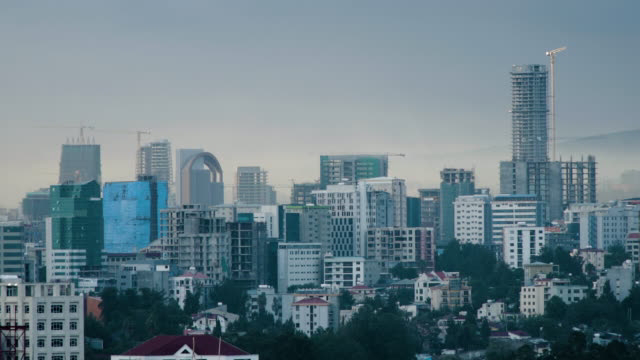
Finfinne ,  view from above. 

The issue of middle bureaucracy wielding significant power and influence within the Ethiopian government is a complex and significant challenge that has persisted for many years. The prevalence of middle managers thwarting change and reform is a serious impediment to progress and development within the country. This phenomenon highlights the entrenched nature of bureaucratic power structures and the significant obstacles they pose to meaningful transformation.

Middle managers undoubtedly play a crucial role in the functioning of any government or organization. They are often repositories of institutional knowledge and possess the expertise required to navigate complex bureaucratic processes. However, when these individuals become resistant to change and reform, they can stifle innovation and impede the advancement of the state.

One of the primary reasons for the enduring influence of middle managers is their ability to survive regime changes and anti-corruption purges. This resilience enables them to maintain their positions of power and continue to exert control over decision-making processes. As a result, they can effectively sabotage initiatives aimed at improving governance and combating corruption, thereby perpetuating a system that serves their interests at the expense of broader societal welfare.

Moreover, the phenomenon of middle bureaucracy owning the state raises fundamental questions about accountability and transparency within the Ethiopian government. When a relatively small cohort of individuals possesses the authority to obstruct or facilitate change, the potential for abuse of power and the entrenchment of vested interests is significant. This not only undermines the effectiveness of governance but also erodes public trust in state institutions and the rule of law.

Addressing this issue requires a multifaceted approach that encompasses legal and institutional reforms, as well as a concerted effort to foster a culture of accountability and transparency. It is essential to implement mechanisms that limit the unchecked power of middle managers and ensure that their actions are subject to oversight and scrutiny. Additionally, efforts to promote merit-based recruitment and advancement within the civil service can help mitigate the influence of entrenched interests and create opportunities for fresh perspectives and innovative thinking.

Ultimately, overcoming the dominance of middle bureaucracy in Ethiopia's government demands a sustained commitment to institutional reform and a willingness to confront vested interests. By empowering a new generation of public servants and fostering a culture of openness and accountability, the government can begin to address the root causes of bureaucratic resistance to change and lay the groundwork for a more inclusive and responsive governance system.

There have been several instances in Ethiopia where middle managers within the government bureaucracy have been implicated in obstructing change and reform. While specific examples may not always be publicly disclosed due to the sensitive nature of such matters, there have been reports and allegations that shed light on this issue. Here are a few examples:

1. Anti-corruption efforts: Despite the Ethiopian government's commitment to combating corruption, there have been reports of middle managers within various government agencies impeding anti-corruption initiatives. This includes instances where individuals in middle management positions have allegedly thwarted investigations into corrupt practices or resisted the implementation of measures designed to enhance transparency and accountability.

2. Infrastructure and development projects: In the context of large-scale infrastructure and development projects, there have been reports of middle managers using their influence to delay or block initiatives that could potentially disrupt established networks of patronage and influence. This has been observed in sectors such as construction, energy, and transportation, where vested interests may seek to maintain the status quo to protect their own positions and advantages.

3. Political and administrative reforms: Efforts to enact political and administrative reforms have faced resistance from mid-level bureaucrats who are reluctant to relinquish their control over decision-making processes. This has been particularly evident in cases where reforms aimed to decentralize power or streamline administrative procedures, as middle managers may perceive such changes as a threat to their authority and influence.

4. Regulatory compliance and enforcement: Middle managers within regulatory bodies have been accused of impeding the enforcement of laws and regulations, particularly in sectors where powerful vested interests operate. This can manifest in the form of selective enforcement, lack of diligence in investigations, or deliberate delays in processing applications, licenses, or permits.

While concrete evidence of these instances may not always be readily available, the prevalence of such reports underscores the entrenched nature of bureaucratic resistance to change within Ethiopia. These examples highlight the significant challenges posed by middle managers who wield influence and are resistant to reforms that could potentially diminish their power or disrupt existing networks of patronage and influence. Addressing these challenges requires a comprehensive approach that addresses institutional and cultural factors that perpetuate this phenomenon.
How to overcome the problems :
Overcoming resistance from middle managers within the Ethiopian government requires a multifaceted approach that addresses institutional, structural, and cultural factors. Here are several strategies that the government could consider to address this challenge:

1. Strengthening institutional frameworks: Implementing robust institutional frameworks that promote transparency, accountability, and merit-based decision-making is critical. This may involve revising regulations, restructuring government agencies, and establishing oversight mechanisms to ensure that middle managers are held accountable for their actions.

2. Merit-based recruitment and promotion: Emphasizing merit-based recruitment and promotion processes can help mitigate the influence of nepotism and favouritism within the civil service. By ensuring that individuals are appointed and promoted based on their qualifications and capabilities, the government can reduce the prevalence of individuals who may be more inclined to resist change for personal gain.

3. Training and capacity building: Investing in training and capacity building programs for middle managers can help equip them with the skills and knowledge necessary to adapt to changing circumstances and embrace reforms. This may include leadership development, conflict resolution, and change management training to foster a culture of continuous improvement and adaptability.

4. Encouraging a culture of innovation and openness: Creating an environment that promotes innovation and openness to new ideas can help counteract resistance to change. Encouraging middle managers to participate in decision-making processes, providing avenues for feedback, and recognizing and rewarding innovative practices can contribute to a more dynamic and responsive bureaucracy.

5. Establishing clear performance metrics and expectations: Clearly defining performance metrics and expectations for middle managers can help align their incentives with the brr goals of the government. This can include setting targets for efficiency, service delivery, and compliance with regulations, as well as establishing consequences for non-compliance.

6. Engaging civil society and the private sector: Collaborating with civil society organizations and the private sector can provide additional oversight and support for reform efforts. External actors can help hold middle managers accountable, advocate for transparency, and contribute expertise to drive change in areas such as anti-corruption, regulatory compliance, and service delivery.

7. Political leadership and will: Ultimately, political leadership and will are crucial for driving meaningful change within the bureaucracy. Political leaders must demonstrate a commitment to reform, communicate the importance of change to the public and the civil service, and take decisive action to address resistance from middle managers when necessary.

It is important to note that addressing resistance from middle managers is a complex and ongoing process that will require sustained effort and a willingness to confront entrenched interests. By taking a comprehensive approach that encompasses institutional reforms, capacity building, and a shift in organizational culture, the Ethiopian government can begin to overcome the challenges posed by bureaucratic resistance and pave the way for a more effective and responsive governance system.

The force field analysis is based on the Memorandum of Understanding (MoU) between Somalilan and Ethiopia


Force field analysis is a useful technique for evaluating the forces for and against a particular decision, change, or action. In this case, the force field analysis is based on the Memorandum of Understanding (MoU) between Somaliland and Ethiopia. Here is an analysis of the forces for and against the MoU:

Forces in Favor of the MoU:
1. Ethiopia: As a powerhouse in the region, Ethiopia brings influence, resources, and strategic importance to the agreement.
2. Somaliland: Somaliland's functioning democratic system, stability, and strategic location make it an attractive partner for the MoU.
3. Israel: With its status as a Middle East democracy leader, Israel's support adds international legitimacy and potential benefits to the MoU.
4. 36 African countries: The support of a significant number of African countries provides regional backing and solidarity for the MoU.
5. Taiwan: As a leading technology and democracy advocate, Taiwan's support can contribute expertise and resources to the MoU.
6. UK: The UK's role as a technical partner and economic booster of Somaliland can provide valuable support and resources for the MoU.
7. Majority of UN members, including the Security Council: International recognition and support from the majority of UN members, including influential Security Council members, bolster the legitimacy of the MoU.

Forces Against the MoU:
1. Somalia: Given its historical rivalry with Somaliland, Somalia may work against the MoU due to political and territorial disputes.
2. Al-Shabaab: As a terrorist group based in Somalia and elsewhere in East Africa and the Horn of Africa, Al-Shabaab may seek to disrupt the MoU and create instability.
3. Eritrea: The government of Eritrea, characterized as a dictatorship, may oppose the MoU due to its own regional interests and alliances.
4. Qatar: As a country accused of sponsoring terrorism, Qatar's opposition to the MoU may stem from geopolitical and strategic considerations.
5. Egypt: Concerns related to Nile water and regional dynamics may motivate Egypt to oppose the MoU.
6. Djibouti: With self-interest in financial matters, Djibouti may resist the MoU if it perceives potential economic losses.
7. US: The US military base in the Red Sea, driven by self-interest, may complicate the geopolitical landscape and create friction related to the MoU.
8. Turkey: As a country accused of sponsoring terrorism, Turkey's opposition to the MoU may derive from its regional interests and alliances.

In conclusion, the force field analysis indicates a complex array of forces for and against the MoU between Somaliland and Ethiopia. The analysis underscores the importance of considering these forces and their potential impact on the success and implementation of the MoU.
Xiinxalli dirree humnaa tooftaa faayidaa qabu humnoota murtii, jijjiirama ykn gocha murtaa’e tokkoof deggeruu fi mormuu madaaluuf gargaarudha.  Haala kana keessatti xiinxalli dirree humnaa kan bu’uureffame Yaadannoo Waliigaltee (MoU) Somaaleelaandii fi Itiyoophiyaa gidduu jiru irratti.  Xiinxalli humnoota Waliigaltee kana deggeranii fi morman kunooti:

 Humnoonni Waliigaltee kana Deeggaran:
 1. Itiyoophiyaa: Akka humna naannichaatti Itoophiyaan dhiibbaa, qabeenya, fi barbaachisummaa tarsiimoo waliigaltee kanaaf fiddi.
 2. Somaliland: Sirni dimokiraasii Somaliland hojiirra jiru, tasgabbiin, fi bakki tarsiimoo qabduun waliigaltee kanaaf michuu hawwataa ta’a.
 3. Israa’el: Deeggarsi Israa’el akka hoggantuun dimokiraasii Baha Giddu Galeessaatti qabduun seera qabeessummaa idil-addunyaa fi faayidaa waliigaltee kanaaf argachuu danda’u dabalata.
 4. Biyyoota Afrikaa 36: Deeggarsi biyyoota Afrikaa baay’ee ta’an waliigaltee kanaaf deeggarsa naannoo fi gamtaa ni kenna.
 5. Taayiwaan: Akka leelliftuu teeknooloojii fi dimokiraasii adda dureetti, deeggarsi Taayiwaan ogummaa fi qabeenya waliigaltee kanaaf gumaachuu danda’a.
 6. UK: Gaheen UK akka michuu teeknikaa fi dinagdee Somaliland guddiftuutti qabdu waliigaltee kanaaf deeggarsa fi qabeenya gatii guddaa qabu kennuu dandeessi.
 7. Mana Maree Nageenyaa dabalatee miseensota Dhaabbata Mootummoota Gamtoomanii harki caalaan: Miseensoota Mana Maree Nageenyaa dhiibbaa qaban dabalatee miseensota UN harka caalu irraa beekamtii idil-addunyaa fi deeggarsa argachuun seera qabeessummaa Waliigaltee kanaa ni cimsa.

 Humnoonni Waliigaltee Mormii:
 1. Somaaliyaa: Dorgommii seenaa Somaalilaandii waliin qabdu yoo ilaalle, Somaaliyaan waldhabdee siyaasaa fi naannoo irraa kan ka’e Waliigaltee kana mormuun hojjechuu dandeessi.
 2. Al-Shabaab: Akka garee shororkeessaa Somaaliyaa fi bakka biraa Baha Afrikaa fi Gaanfa Afrikaa keessatti hundaa’eetti, Al-Shabaab Waliigaltee kana jeequu fi tasgabbii dhabuu uumuuf yaalu mala.
 3. Eertiraa: Mootummaan Eertiraa, kan akka mootummaa abbaa irreetti amala qabu, dantaa naannoo fi gamtaa mataa isaa irraa kan ka’e Waliigaltee kana mormuu danda’a.
 4. Qaxar: Akka biyya shororkeessummaa ispoonsara gooteen himatamteetti, mormiin Qaxar Waliigaltee kana irratti qabdu ilaalcha ji’oopoolitikaa fi tarsiimoo irraa maddu ta’uu danda’a.
 5. Masrii: Yaaddoon bishaan Naayilii fi daayinamiksii naannoo waliin walqabatee jiru Masriin waliigaltee kana akka mormtu kakaasuu mala.
 6. Jibuutiin: Dhimma maallaqaa irratti dantaa ofii qabaachuun, Jibuutiin kasaaraa dinagdee mudachuu danda’u yoo hubatte waliigaltee kana mormuu dandeessi.
 7. US: Buufatni waraanaa US Galaana Diimaa keessatti dantaa ofiitiin kan oofu, haala ji’oopoolitikaa walxaxaa taasisuu fi waliigaltee waliigaltee kanaan walqabatee waldhabdee uumuu danda’a.
 8. Turkii: Akka biyya shororkeessummaa ispoonsara gooteen himatamteetti, mormiin Turkiyaan Waliigaltee kana irratti qabdu dantaa fi gamtaa naannoo ishee irraa kan maddu ta’uu mala.

 Xumura irratti, xiinxalli dirree humnaa humnoota walxaxaa waliigaltee Somaaleelaandii fi Itoophiyaa gidduutti taasifamee fi morman agarsiisa.  Xiinxalli kun humnoota kanaa fi milkaa’inaafi hojiirra oolmaa Waliigaltee Waliigaltee kanaa irratti dhiibbaa isaan geessisuu danda’an ilaaluun barbaachisaa ta’uu hubachiisa.